On May 21 and June 2, 2026, Google changed how it ranks websites. This update helps real writers who share genuine, useful information. Google is actively pushing down websites that use cheap software to pump out hundreds of useless pages.
Now, the search engine looks for blogs run by real people with actual hands-on experience. Shoving the same search phrases into your text over and over will not work anymore. Your page must actually solve the reader's problem. If you want Google to pick your site for the answer blocks at the top of the page, you have to get straight to the point and cut out all the extra fluff.
May 2026 Google Core Update
Search results shifted wildly over those two weeks. Google's eleven-day rollout caused major ranking ups and downs for websites across almost every industry. This update changed the main rules Google uses to judge content, forcing website owners to focus on true quality rather than old search tricks.
Many website owners watched their organic traffic and keyword positions bounce around wildly. This volatility was not random. The update landed right after major AI search announcements at Google I/O 2026. It marks a moment where search systems move past old keyword matching rules to favor deep context.
As an experienced search strategist, I have analyzed major system rollouts for over a decade. This update feels different from simple spam filters. It is a system-wide upgrade that re-evaluates web value. If your traffic dropped, your site did not receive a manual penalty. Instead, Google adjusted its ranking systems to measure helpfulness in a brand-new way.
You may also read :- Advantages of Website Advertising: Boost Traffic & Sales
Google May 2026 Algorithm Update: What Changed?
When analyzing the Google May 2026 algorithm update, clear patterns emerge regarding winners and losers. The system now looks closely at the true purpose of every webpage. It checks if content exists to help people or if it exists just to catch search traffic.
The biggest losers in this update were sites using massive, unedited content generation. Google has gotten much smarter at recognizing text that lacks real-world utility. If a site publishes hundreds of shallow pages to target search terms, its visibility likely dropped during this rollout.
Stricter Checks on Low-Value Automations
The core system now spots repetitive text patterns with ease. Pages that repeat known facts without adding new insights lost major ground. This change aims to clean up search results so users find unique perspectives instead of copied text.
The Impact on Local Search and Directories
We also saw massive shifts in local search results. Large directory and aggregator platforms lost significant visibility for popular local search terms. Google now paths users directly to actual service providers rather than generic middleman list sites.
"The May core update proves that search engines prioritize original data and true source material. Regurgitated information no longer carries weight in modern ranking systems." — Senior Search Analyst Opinion
The Push for Generative Experience: Google Going Full AI May 26
The phrase Google going full ai may 26 perfectly describes the current direction of search. Google is transforming its interface into an answer engine. This means the system wants to give direct answers inside the search results page using advanced models.
To stay visible, your content must serve these generative systems. The system scans the web for crisp, factual sentences that answer user queries cleanly. It then pulls those sentences directly into summary blocks at the top of the search page.
[Traditional Search] -> Focuses on keyword match and backlinks
[Generative AI Search] -> Focuses on entity relationships, user intent, and clear facts
This change requires a shift in how we structure articles. Content must use clear definitions and structured layouts. This allows search crawlers to extract facts easily and use them in live answers.
Understanding Topical Ecosystems and Clusters
Isolated pages no longer rank well on their own. The May 2026 core update favors sites that build complete content ecosystems. You must cover a topic from every angle to prove your site holds true topical authority.
The Death of Keyword Stuffing
The era of repeating exact search phrases to rank is officially over. Google uses advanced semantic systems to understand concepts. It ranks pages based on how well they satisfy a user's underlying need, not how many times a keyword appears.
May 2026 Core Update Performance Review
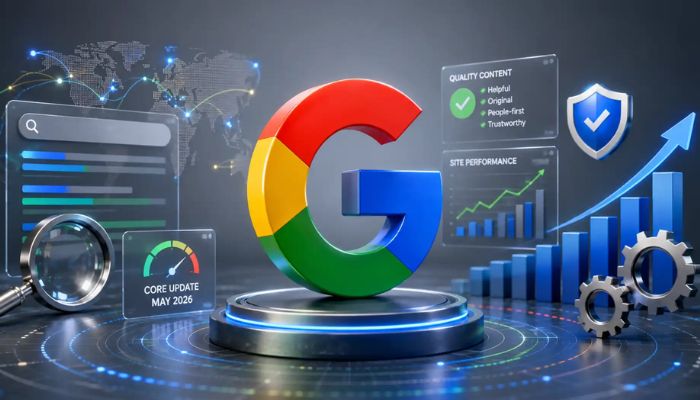
A detailed May 2026 core update performance review shows that user experience metrics matter more than ever. Fast page speeds, proper mobile layout, and zero intrusive elements keep visitors on your page. If users leave your site immediately, your rankings will suffer.
- Content Originality: High-performing sites include unique images, case studies, and primary data.
- Clear Readability: Simple language options outranked complex, academic writing styles.
- Intent Matching: Pages that solve problems quickly gained visibility over long, fluffy articles.
The system uses behavior indicators to see if a page truly answered a question. If a user clicks your link and then goes back to search results, the algorithm notices this gap in satisfaction.
Action Plan for Ranking Recovery
If your organic traffic dropped during the May 2026 Google Core Update, you need a calm, structured plan to recover. Do not make sudden, frantic changes to your website. Let the search results stabilize completely before you alter your content strategy.
1. Run a complete content audit: Analyze low-performing pages.
Look at pages that lost the most traffic in Search Console. Check if the information is outdated, thin, or repetitive.
2. Inject real-world experience signals: Build trust factors.
Add clear author profiles, professional credentials, and real case studies. Prove that a real human expert wrote the information.
3. Fix technical user experience issues: Optimize core vitals.
Improve your loading speeds and fix mobile layout errors. Ensure your site structure is clean and easy to navigate.
4. Re-align with exact user intent: Refocus your topics.
Rewrite headings to address the specific questions your audience asks. Remove fluff and deliver your answers within the first few paragraphs.
Advanced Search Optimization Standards
Modern optimization requires moving past old SEO methods. You must optimize for multiple types of search systems simultaneously. This includes traditional search engines, generative engines, and artificial intelligence models.
| Optimization Type | Core Focus | Primary Goal |
| SEO | Traditional links and keywords | Drive organic website clicks |
| AIO / GEO | Clear data and facts | Get cited in AI summaries |
| AEO | Direct answers to questions | Win featured answer snippets |
This comparative breakdown shows that you need a balanced approach. Your site must provide long-form depth for human readers while offering crisp summaries for AI parsers. Using tables and bullet points makes it easy for automated systems to pull your data.
Designing Content for Modern Layouts
Keep your paragraphs short and your vocabulary straightforward. Long blocks of text scare readers away on mobile devices. Use bold text gently to highlight primary takeaways so skimmers can absorb your value instantly.
Your headings must follow a strict, logical order. Use your main topics in your H2 structures, and break down the specific components in your H3 sections. This creates a clean map that search engines use to understand your page value.
Looking Ahead: The Evolution of Search Quality
The May 2026 Google Core Update shows us exactly where digital media is going. The internet no longer rewards thin articles designed solely for search volume capture. True authority, authentic human voice, and clean technical execution win the top spots.
Give your readers the best possible resource. Write in plain English, organize your points logically, and share your actual hands-on experiences. When you put your visitors first, you build a website that stays strong through any Google update.
Frequently Asked Questions
Why did my website lose traffic during the May 2026 Google Core Update?
Your site likely experienced a reassessment of content quality rather than a direct penalty. Google adjusted its global ranking systems to favor deeper topical authority, original human insight, and better intent matching.
How do I optimize my content for Google AI Overviews?
Provide a direct, factual summary at the very beginning of your articles. Use clear headings, bulleted lists, and structured tables so automated search crawlers can easily extract your data.
Should I delete my AI-generated blog posts after this update?
You do not need to delete all automated content. However, you must heavily edit any low-value, repetitive text. Add original images, expert quotes, and unique insights to make the pages useful for human readers.
Related Articles
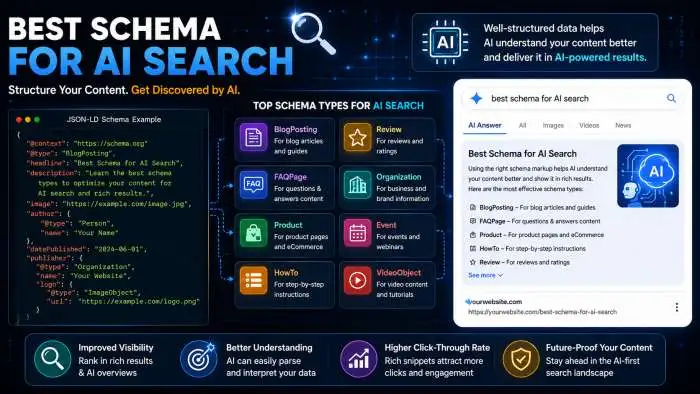
Best Schema Markup for AI Search: How to Get Your Site Cited by LLMs
If you want your content to appear in AI search results, you need to use schema markup. The best schema for AI search is a combination of Organization, Article, FAQPage, and Person schema. These help AI systems like ChatGPT, Google Gemini, and Microsoft Copilot understand...

Easy Digital Marketing Strategy for 2026: Simple Ways to Grow Online
A digital marketing strategy for 2026 is just a well-defined strategy that outlines how you'll achieve your business Goal through online methods and channels. It's the pathway that will help your business reach those who need to know it, and grow your sales. This strategy is centered around who,...

Proven Customer Engagement Strategies to Drive Business Growth
A customer engagement strategy is your plan for building strong relationships with your customers at every step of their journey. It's not just about making a sale. It's about creating real connections that make people feel valued and heard . Think of it as the way you talk...