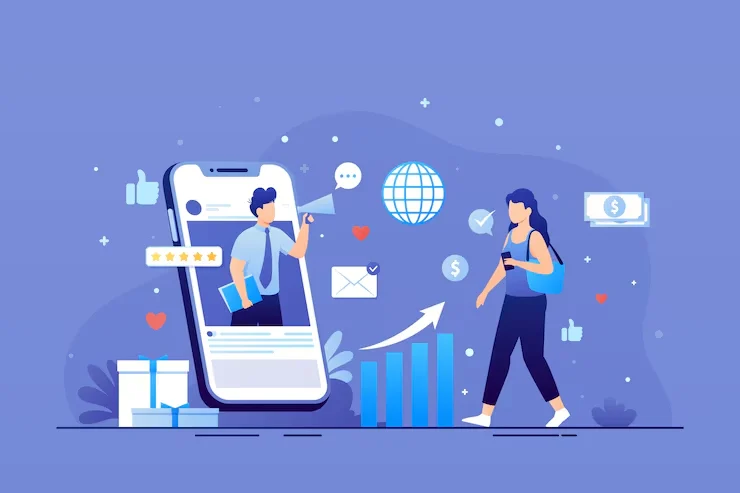
The types of mobile marketing cover SMS texts, push notifications, mobile video ads, in-app advertising, QR codes, and location-based targeting. Every one of these reaches people on their phones which is where most people spend four to six hours daily.
Businesses use these channels because phone screens get attention that billboards and email inboxes simply do not get anymore. The right types of mobile marketing strategy depend on your audience, your budget, and what action you want people to take. This guide breaks each one down in plain language.
Phones Changed Everything And Most Businesses Are Still Catching Up
Here is something worth sitting with for a moment. Your customer wakes up and checks their phone before getting out of bed. They scroll during breakfast. They shop during their lunch break. They watch videos before sleeping. Their phone is with them through all of it. That is not a complaint about screen time.
That is just where attention lives now. And mobile marketing is the practice of showing up in that space thoughtfully, usefully, and at the right moment. The brands doing this well are not necessarily the biggest or richest ones. They are the ones who understand which channel fits which situation. That is exactly what this guide covers.
The Core Types of Mobile Marketing One by One
Every Type of Mobile Marketing Broken Down Honestly
There is no single best channel. Each one has a job. Understanding that is the first step to building something that actually works.
SMS Marketing: Texts Still Beat Almost Everything for Open Rates
SMS Marketing Strategies That Feel Personal, Not Spammy
Think about the last text you received from a brand. Did you read it? Probably yes most people do, usually within a few minutes of it landing.
That is the core reason SMS marketing strategies keep showing up in serious marketing conversations. A 98% open rate is not a made-up number. It reflects a simple truth: people read their texts. They do not always read emails, do not always see social posts, and definitely skip most display ads. But a text? It sits right there until they tap it.
The trick is earning the right to send it.
Permission matters more in SMS than almost any other channel. Someone who signed up for your texts because they genuinely wanted deals is a completely different audience from someone who got added to a list they never chose. The first group converts. The second group unsubscribes or worse, reports you as spam.
What actually works in SMS marketing:
Time-sensitive offers land well over text. A message that says a sale ends tonight creates urgency in a way a banner ad never does. Appointment reminders, order updates, and back-in-stock alerts also perform strongly because they carry real, useful information not just a pitch.
Keep texts short. One idea per message. One clear action the person can take. A text with three offers and two links is a text that confuses people into doing nothing.
The brands getting SMS right are the ones treating it like a conversation, not a broadcast. Short, relevant, and sent when it actually matters. - Neil Patel, Digital Marketing Expert
You may also read :- Mobile Marketing Tools Marketers Trust
Mobile App Advertising: Getting In Front of People Without Your Own App
Mobile App Advertising Formats and When Each One Makes Sense
Mobile app advertising means your ads appear inside apps other people built games, news readers, weather tools, fitness trackers, and everything in between. You are borrowing attention inside an experience someone already chose to be part of.
Four formats dominate this space:
- Banner ads sit at the top or bottom of the screen. They are always visible but easy to tune out. Good for keeping a brand name familiar. Not great for driving immediate clicks.
- Interstitial ads go full screen, usually between natural breaks in the app experience like moving from one article to the next, or finishing a level in a game. They demand attention because they take over the screen. They need to be relevant or users get frustrated fast.
- Rewarded video ads are genuinely smart. The user watches a short video and gets something valuable in return extra coins, unlocked content, a free feature. They chose to watch. That choice shifts the dynamic entirely. Opt-in attention is far more valuable than forced attention.
- Native ads blend into the app's existing look and feel. They do not shout "advertisement" they sit inside the content flow naturally. Higher engagement, lower annoyance. Worth testing in almost any campaign.
Mobile Video Advertising: Six Seconds to Make Someone Feel Something
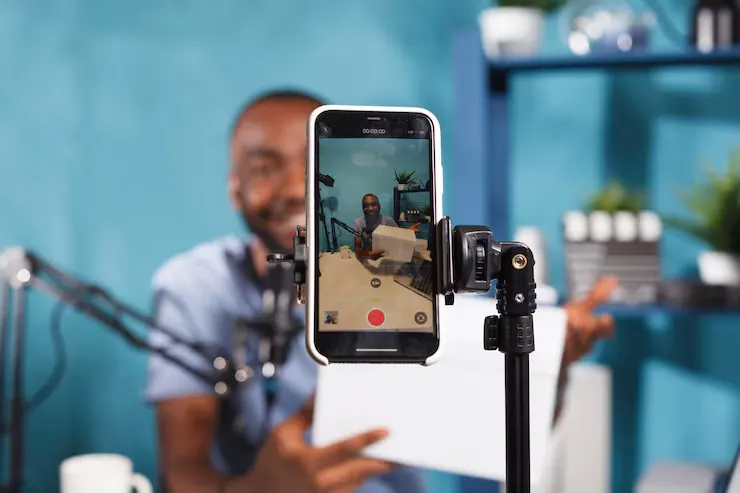
Why Mobile Video Advertising Is the Fastest-Growing Ad Format Right Now
Short videos on phones have become the default way a huge chunk of the population consumes content. That shift did not happen gradually it happened fast, driven by TikTok, Reels, YouTube Shorts, and Stories formats across every major platform. Mobile video advertising lives inside all of those environments.
The formats worth knowing:
Pre-roll ads play before the video someone actually wanted to watch. On YouTube, users can skip after five seconds. That five-second window is not a limitation it is a forcing function. Brands that lead with something immediately interesting instead of a logo and tagline see far better results.
Stories ads are vertical, full-screen, and built for how people naturally hold their phones. Shooting video horizontally and then cropping it for Stories is a visible mistake people notice the difference. Native vertical content always outperforms repurposed horizontal content in this placement.
Out-stream video plays inside written content between paragraphs on a news site or blog. It starts silently as users scroll past. The visual needs to communicate something even without sound, because many people never unmute.
The production budget argument for not doing video is mostly gone now. A well-lit, clearly messaged 10-second video shot on a decent phone performs better than a polished 60-second ad that loses people in the first three seconds.
Push Notifications: The Re-Engagement Tool Most Apps Underuse
Push notifications are the small messages that appear on a locked screen from an app someone already downloaded. They are a direct line to people who already showed interest they installed your app, which is a commitment of sorts.
The problem most brands run into: they treat push notifications like a broadcast channel and send too many, too often, without enough relevance. Users turn notifications off and never turn them back on.
What actually drives results with push notifications:
Personalization based on behavior. A push that says "You left something in your cart" works because it is specific. A push that says "Big sale today!" works less because it feels generic. Timing matters enormously. A restaurant app pushing a lunch deal at 11:30 a.m. is helpful. The same push at 3 p.m. is just noise.
Location-triggered push notifications are genuinely powerful for physical businesses. A customer walking within a block of your store gets a notification with a reason to stop in. That kind of real-world relevance turns passive app users into actual foot traffic.
QR Code Marketing: Low Tech, High Impact
QR codes had a interesting travel designed in the 1990s, for the most part overlooked for a long time, at that point abruptly all over after 2020 when eateries required contactless menus. They stuck around since they fathom a genuine issue: interfacing physical things to computerized encounters right away.
A client picks up your item in a store. They check the QR code on the bundling. They arrive on a page appearing how it works, what other clients say around it, and perhaps an offer for a rebate on their following buy. That whole travel happened since of a little printed square.
QR codes work best when the destination earns the scan. Sending someone to a generic homepage after they took the effort to scan is a waste of their goodwill. Send them somewhere specific a demo video, an exclusive offer, a product comparison page, or a sign-up form with a clear benefit.
Placement matters too. QR codes on product packaging, table tents, event badges, and print ads make sense. QR codes on highway billboards where people are driving do not.
Location-Based Mobile Marketing: Reaching People Based on Where They Are
Geofencing and Geotargeting as Part of Your Mobile Marketing Strategy
Two terms come up constantly here, and they are related but different:
- Geofencing draws a virtual boundary around a physical location. When a phone crosses that boundary, something triggers an ad, a notification, an offer. A gym might geofence a nearby fast food restaurant and serve an ad to anyone standing in the parking lot. Aggressive? Maybe. Effective? Absolutely.
- Geotargeting is broader. It uses location data to serve relevant content to people in a general area a city, a neighborhood, a zip code without requiring them to cross a specific line. A heating company targeting ads to people in cold regions during winter is geotargeting. Simple, relevant, and genuinely useful.
Both approaches share one underlying logic: relevance is respect. When a mobile ad connects to where someone actually is and what they might actually need in that moment, it stops feeling like an interruption and starts feeling like helpful information.
In-App Marketing: Personalization Inside Your Own App
If you have a mobile app, in-app marketing is where your deepest engagement happens. This is not about external ads it is about how you communicate with users while they are already inside your product.
Personalized recommendations based on past behavior. Prompts to complete a profile or unlock a feature. Loyalty reward nudges. Early access announcements for returning users. All of this counts as in-app marketing.
The big advantage here is context. You know exactly what the user just did, what they have done before, and what they have not tried yet. That knowledge makes every message more relevant than anything you could send through an external channel.
Choosing the Right Types of Mobile Marketing Strategy for Your Situation
No business needs to use every channel at once. That thinking leads to spreading budgets thin and doing nothing particularly well. A more useful approach:
If you have a physical store or restaurant start with QR codes and location-based ads. Low cost, immediate relevance, measurable foot traffic impact.
If you sell online and want repeat purchases SMS marketing and push notifications are your strongest retention tools. Reach existing customers when it matters most.
If you are building brand awareness among a new audience mobile video advertising, particularly short-form on social platforms, gets your brand in front of people who have never heard of you.
If you have an app in-app marketing and push notifications should be your core investment. You already have the audience. The job is keeping them engaged.
The types of mobile marketing strategy that work long-term combine two or three of these channels in a way that serves the customer at different stages awareness, consideration, purchase, and return.
FAQs
Q1. Which sorts of versatile showcasing work best for a trade with a exceptionally little budget?
QR codes and SMS promoting are the lowest-cost beginning focuses. QR codes fetched nearly nothing to make and convey. SMS requires a stage membership, but indeed humble campaigns with a little, permission-based list can produce solid returns since the open rates are so high.
Q2. What makes SMS promoting techniques work superior than email?
Texts arrive in a individual space the same put individuals get messages from family and companions. There is no spam organizer, no calculation sifting, and no swarmed inbox competing for consideration. When somebody gets a content from a brand they selected into, they nearly continuously studied it inside minutes.
Q3. How is portable app promoting diverse from social media advertising?
Social media publicizing runs on stages like Instagram, Facebook, or TikTok inside those particular apps. Versatile app publicizing is broader your advertisements show up interior thousands of distinctive apps over the open web, not fair interior one social stage. Both have esteem, but they reach individuals in distinctive settings.
Q4. Is mobile video advertising only for large companies with big production budgets?
Not anymore. Some of the best-performing mobile video ads right now are simple a person talking directly to the camera, a product demonstration shot on a phone, a before-and-after sequence. The production bar has dropped significantly. Story, relevance, and the first three seconds matter far more than production value.
Q5. How frequently ought to thrust notices be sent without irritating users?
Most clients endure two to three notices per week some time recently they begin feeling overpowered. Less, more significant notices reliably beat visit nonexclusive ones. Track your opt-out rate if it begins climbing, recurrence is nearly continuously portion of the issue.
Wrapping Up
The types of mobile marketing accessible nowadays cover each arrange of the client relationship from the to begin with time somebody listens approximately your brand to the minute they ended up a faithful rehash buyer. SMS promoting methodologies, portable app promoting, portable video publicizing, and location-based instruments each play a distinctive part in that travel.
The businesses seeing real results are not using all of them at once. They picked the channels that fit their customers' habits, their own resources, and their specific goals and they got good at those before adding more.
That is genuinely the whole strategy. Pick one channel. Learn what works. Build from there.
Related Articles
Easy Mobile Marketing Tips: Simple Ways to Reach Phone Users
To cut to the chase: mobile marketing tips enable you to reach customers in their own context: on their phone. For 2026 that involves developing quick, convenient and personal experiences for those who rely on their phones for virtually anything, be it social media or product...
What Are the Major Mobile Marketing Trends in 2026? Full Guide
Mobile marketing is changing how brands connect with people. Mobile marketing trends in 2026 show a big move toward smart tools, fun videos, and easy shopping on phones. People use their phones more than computers now, so brands must focus on phones first. This guide...
How to Do WhatsApp Marketing: Ultimate Step-by-Step Guide
Honestly, WhatsApp marketing works so well because you're reaching people where they already spend all their time. But look, you can't just start blasting messages out of nowhere—you absolutely need their permission first. Once you've got that down, it’s just a matter of picking the...