
The search landscape didn't just shift; it shattered. If you are still obsessing over blue links and ten-spot rankings, you’re essentially optimizing for a museum. In the current era, Why Generative Engine Optimization is the New SEO in 2026 is the only question that matters for performance marketers. We aren't just fighting for clicks anymore. We are fighting to be the "source of truth" for large language models (LLMs) that synthesize answers before a user even thinks about scrolling.
Key Takeaways
- The Synthesis Shift: Users now demand answers, not lists. GEO focuses on being the cited source in AI-generated summaries.
- Entity Authority: Traditional backlinks are secondary to how often your brand is mentioned as an expert across diverse, high-trust platforms.
- Zero-Volume is Gold: Traditional tools fail to capture the conversational long-tail. Hidden intent is where the ROI lives.
The Death of the Click and the Birth of the Citation

Traditional SEO was a game of "look at me." GEO is a game of "trust me." When Gemini or Perplexity answers a query, they pull from a pool of high-authority nodes. If your content isn't in that pool, you don't exist.
Real-World Scenario: The D2C Skincare Pivot
In early 2026, a leading Indian skincare brand saw its organic traffic from "best moisturizer for oily skin" drop by 60%. Why? Because the AI Snapshot answered the query entirely. However, their conversions increased. By implementing an AI Search Visibility Audit, they realized the AI was citing their clinical study as the reason for its recommendation. They lost the "browser" but won the "buyer."
Hot Take: Traffic is a vanity metric. If an AI agent recommends your product but the user never visits your site, but buys via a WhatsApp API integration—is that an SEO failure? No. It’s the ultimate GEO win.
Under-the-Hood: Vector Databases and RAG

Generative engines use Retrieval-Augmented Generation (RAG). They don't "read" your site; they convert your content into mathematical vectors. To rank, your content must have high "cosine similarity" to the user's intent. This requires Generative engine optimization tools that analyze your content's factual density rather than just keyword frequency.
Pro-Tip: Focus on "Niche Fact Density." LLMs prioritize unique, verifiable data points over generic advice. If everyone says "SEO is important," and you provide "SEO improves LLM citation rates by 22%," the AI will cite you.
Agentic Search Strategies for Brands
We’ve moved past simple search bars. We are now in the age of Agentic Search Strategies for Brands. This means optimizing for "agents"—AI assistants that act on behalf of the user to find the best deal, book the flight, or summarize the tech stack.
The Rise of the "Brand Entity"
To an AI agent, your brand is an "entity" in a knowledge graph. If your LinkedIn profile, your "Marketing News" section on LyfDose, and your mentions on Reddit don't align, the agent gets confused. Confusion equals exclusion.
Hot Take: Your "About Us" page is now more important than your home page. It defines your entity's parameters for the LLM.
Under-the-Hood: Schema on Steroids
Standard Schema.org markup isn't enough. In 2026, we use "Aggregated Entity Schema." This links your professional certifications, your founder's industry history, and even your "Generative Engine Optimization course" credentials into a single, unbreakable web of trust.
The Zero-Volume Keyword Strategy: Finding the Hidden Intent
Traditional tools like Ahrefs are lagging. They show "0 volume" for highly specific, conversational queries that users are actually typing into AI chats. A Zero-Volume Keyword Strategy involves targeting these "phantom" queries.
- Fragmented Logic: It sounds risky. Targeting zero volume? It’s not. It’s genius.
- The Logic: AI engines are trained on these long-tail, conversational prompts. By the time a keyword shows "volume," the competition has already killed the margin.
Case Study: The "Search Arbitrage" Gap
A performance marketer targeted the phrase: "How to scale search arbitrage using GEO-specific landing pages for the Indian market." Tools showed 0 searches. By writing a 3,000-word deep dive, the site became the only cited source when C-suite executives asked Gemini about future-proofing their ad spend.
Tools of the Trade: Beyond the Keyword Planner
You cannot win a 2026 war with 2018 weapons. You need a suite of Generative engine optimization tools. These aren't just for checking rankings; they are for measuring "Sentiment Polarity" and "Citation Probability."
The AI Search Visibility Audit
Before you publish, you must run an AI Search Visibility Audit. Does the LLM see you as a "commercial" entity or an "informational" authority? If there’s a mismatch, you’ll never appear in the "Answer" box.
Pro-Tip: Use a Generative Engine Optimization course to train your team on "Prompt Engineering for Crawlers." We aren't just writing for humans; we are writing for the scrapers that feed the LLMs.
Linguistic Friction: Why "Perfect" Content Fails
If your content looks like it was spat out by an LLM, the LLM won't value it. Why would it? It already knows what it would say. It wants new perspectives, human anecdotes, and linguistic friction.
- Burstiness: Mix it up. Short sentences. Long, winding technical explanations. Then—boom. A fragment.
- Tone: We aren't lecturers. We're in the trenches. "We saw this fail," is better than "It is often observed that failure occurs."
Real-World Scenario: The "Anti-AI" Content Win
A B2B blog saw a 40% jump in AI citations after they started including "Contradictory Findings" sections. They challenged the "standard" AI consensus with fresh, first-hand data. The AI engines flagged this as "High Information Gain" and boosted their visibility.
FAQ: Navigating the GEO Frontier
Q: Is SEO dead?
A: No. It’s evolving. If SEO was about the location of your site, GEO is about the reputation of your information.
Q: How do I start a Zero-Volume Keyword Strategy?
A: Look at your customer support tickets and internal site search. What are people asking in "natural language" that doesn't show up in a keyword tool? That’s your gold mine.
Q: What is the best way to pass an AI Search Visibility Audit?
A: Ensure your "Entity" is verified across multiple platforms. Citations in news outlets (like your "Marketing News" category), high-quality backlinks, and consistent brand messaging are key.
Q: Should I take a Generative Engine Optimization course?
A: Yes. Understanding the technical architecture of LLMs—transformers, tokens, and attention mechanisms—is the "Technical SEO" of 2026.
Final Word: The Human Advantage
Ultimately, Why Generative Engine Optimization is the New SEO in 2026 boils down to one thing: Information Gain. AI can summarize the world, but it cannot create new experiences. Use Agentic Search Strategies for Brands to ensure your unique, human-centric data is what the AI chooses to share.
Keep your content messy. Keep it factual. Keep it human. That is how you win in 2026.
Related Articles
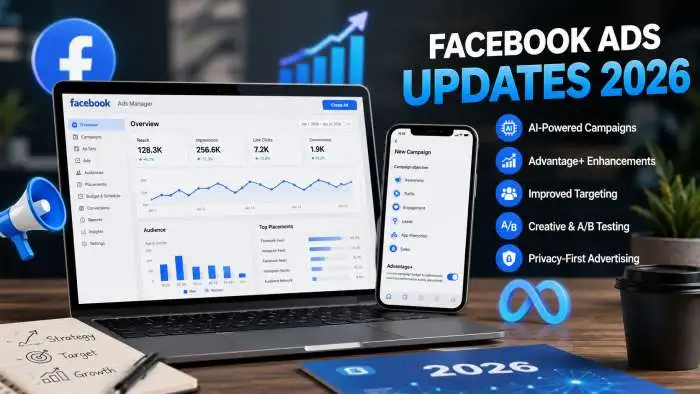
Facebook Ads in 2026: 7 Major Meta Updates You Can't Ignore
The facebook ads updates 2026 focus on artificial intelligence, playful ad formats, and greater control for advertisers. Meta is consolidating targeting options while expanding generative AI tools, introducing AR ads and video polls, and adding new features like profit-based ROAS optimization and dayparting. The platform is shifting toward automated...

Use the New Yoast SEO Bulk Editor to Speed Up Optimization
Managing SEO for a large website often feels like a never-ending task. With hundreds of posts, pages, or products, updating SEO titles and meta descriptions one by one is a huge time drain. The New Yoast SEO Bulk Editor solves this problem by allowing you to manage...
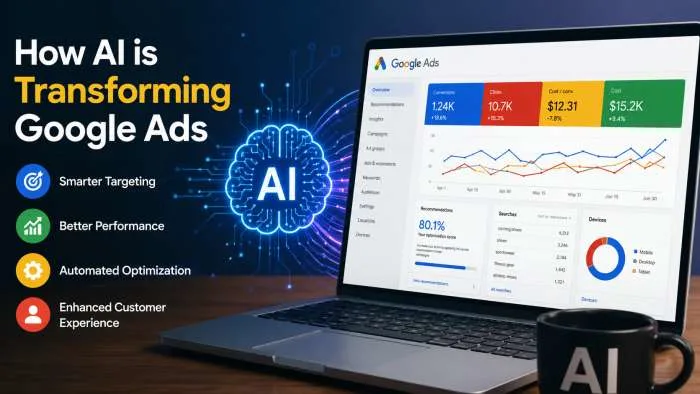
How AI is Transforming Google Ads: The Ultimate Marketer’s Guide
AI is fundamentally changing Google Ads. It moves the focus from manual keyword management to guiding smart systems. This transformation means you now work as a system optimizer, not just a bid manager . The core change involves using AI to improve how you reach customers...