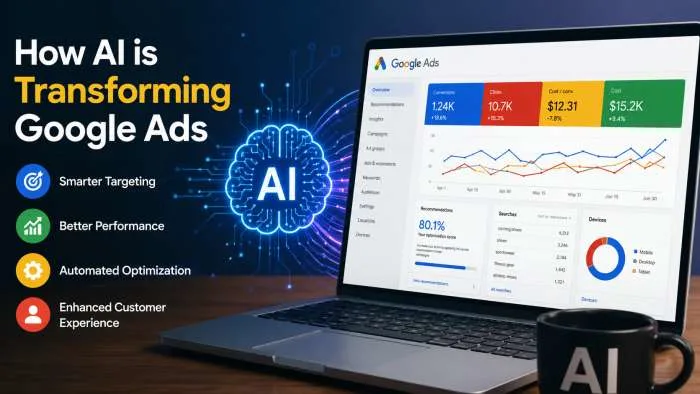
AI is fundamentally changing Google Ads. It moves the focus from manual keyword management to guiding smart systems. This transformation means you now work as a system optimizer, not just a bid manager . The core change involves using AI to improve how you reach customers and measure success. This shift creates new opportunities for those who adapt quickly.
The Impact of AI on Google Ads Performance
Online marketing shifts quickly today. You can no longer just type in a few keywords, set a manual bid, and walk away. Right now, how AI is transforming Google Ads dominates every conversation in the industry. Machine learning completely rewires how we build creative assets and target shoppers. This guide breaks down those big updates and shows you how to use these tools to boost your sales.
You may also read :- What Keywords Reveal About AI Search: Decoding User Intent in LLMs
Understanding the Core Shift in Google Ads
The biggest change is that Google Ads now uses AI to handle the complex tasks. It analyzes huge amounts of data in real-time to find the best customers for your business. This means you can focus on the bigger picture—your overall marketing strategy . AI helps you make smarter decisions faster.
The old way of manually managing every detail is becoming less effective. AI allows for a level of personalization and efficiency that humans simply cannot match alone. It’s like having a super-smart assistant working for you 24/7.
The Rise of "Agentic Commerce": How AI Shops for People
A major part of how AI is transforming Google Ads is the rise of "agentic commerce." This is where AI agents, like Google's "Buy for Me," shop on behalf of people . These agents compare products, check prices, and even complete checkouts. This is not a future trend; it’s happening now, with AI influencing up to 20% of all online orders during recent peak shopping seasons .
This means your ads are now being judged by an AI, not just a human. You need to optimize for these shopping agents. For example, during Cyber Week 2025, AI agents were involved in 20% of all global online sales, a huge shift in e-commerce behavior .
How AI Changes Bidding and Targeting?
With AI, bidding is no longer manual. Smart Bidding strategies use machine learning to set the perfect bid for every single auction . This is a key part of how AI is transforming Google Ads. The system analyzes countless signals like device, location, and time of day to get the best results for your budget. It learns from your data to improve performance over time.
Now, your product feed is also a critical bidding signal . The AI checks your product data, price, and availability. If your feed is not accurate and complete, the AI might choose a competitor. Think of your feed as a bidding asset, not just a catalog.
New Ad Formats and Surfaces
AI is also creating new places for your ads to appear. One of the most exciting is "Direct Offers," a new format in Google's AI Mode. It acts like a salesperson negotiating a deal for the shopper . You can set special offers that the AI can use to attract buyers. This shows how AI is transforming Google Ads from simple ads to interactive, deal-making tools.
Google now builds ads directly into its conversational search tools. People type long questions, and the system places helpful brand links right inside the answer. This setup makes your promotions feel like useful tips rather than annoying interruptions during a user's search.
The New PPC Skill Set: From Keywords to Systems
To succeed with how AI is transforming Google Ads, you must change your skills. The focus is shifting from managing keywords to designing systems . Your new job is to feed the AI with the right data, like accurate conversion goals and high-quality audience signals. You are moving from "execution" to "system optimization."
This means you need to be good at "system prompting." You will use tools like AI Brief to tell Google's AI about your brand, your customer, and your tone of voice. This guides the AI to represent your business correctly across all its campaigns . It’s a new way of "writing" ads.
Why Data Quality is Everything?
Smart software fails completely if you give it bad information. This is the absolute truth behind modern automated marketing. If you track the wrong sales or leave your tracking broken, your budget vanishes fast. You must give the system clean, correct sales data and pack your product list with clear, real-world details.
AI agents compare products based on structured data: price, shipping, color, size, and availability . If your data is incomplete or old, the agent will pick a competitor's product. Good data is the key to being chosen by an AI shopper.
Balancing AI with Human Oversight
While AI is powerful, it still needs human guidance. A key part of how AI is transforming Google Ads is learning where to let the machine lead and where to step in . Automation is good at efficiency and bidding. It can struggle with sudden changes in the market, like a big sale or a new competitor.
You must set clear "lanes" for your campaigns and monitor them. For example, you should separate your brand and non-brand traffic. If you don't, AI will often favor the easiest wins, which can eat up your budget on your own brand name without growing your business.
Practical Tips for Success with AI
- Master Your Product Feed: Fill out every attribute field. Make sure your feed matches your website exactly .
- Use Smart Bidding: Let Google's AI handle bidding. Focus on setting smart goals like Target ROAS .
- Add Negative Keywords: Even with AI, you need to tell the system what NOT to show for. Use negative keywords to stop wasting money .
- Monitor Search Terms: Regularly check the search terms report for Performance Max campaigns to see what people are actually searching for .
- Focus on First-Party Data: Use your own customer data to feed the AI better signals for audience targeting .
The Future is Here: AI Max and Beyond
Google continues to release powerful new AI tools. How AI is transforming Google Ads is evident with products like AI Max for Search, which replaces Dynamic Search Ads. Advertisers using all of AI Max's features see an average of 7% more conversions . These tools expand your reach far beyond what a keyword list can achieve.
AI Max uses advanced signals to find new, relevant customers you wouldn't find otherwise. It’s a big step forward in making your ads smarter and more responsive to what people are searching for.
Expert Quote
"Execution is becoming a commodity and will no longer be a competitive advantage." - Selin Song, President of Google Customer Solutions .
"The advertisers who win agentic commerce will not be the ones with the cleverest ads. They will be the ones whose product data, margin posture, and measurement are ready for a buyer who never sees the ad." - Tony Adam, CEO at Visible Factors .
Conclusion
Jump on these updates early. This new tech does the heavy lifting for your online campaigns so you don't waste hours tweaking settings manually. If you change your approach and use these smart features correctly, you will grab fresh customers quickly and bring in more profit. Treat the software like a new worker on your team—give it correct sales data, and it will do a great job for you.
Frequently Asked Questions
Q: Is AI taking over all the work in Google Ads?
A: No, but it is changing the work. AI handles the complex data analysis and bidding, but you still set the strategy and goals . Your role is to guide the AI, not replace it.
Q: What is the most important thing to do to prepare for AI in Google Ads?
A: Fix your data. Make sure your conversion tracking is perfect and your product feed is complete and accurate. You must give the AI clean, rich data to work with .
Q: What is agentic commerce?
A: It's when an AI agent, like Google's "Buy for Me," shops for products and completes the checkout on a person's behalf. This is reshaping how ads are seen and judged .
Q: Do I still need keywords in Google Ads?
A: Yes, but their role has changed. AI can now find new, high-performing keywords for you. Your job is to create the "signal" or the overall theme, and the AI finds the best matching searches.
Q: How do I know if my AI-powered campaigns are working?
A: Look beyond the in-platform numbers. Use your own data to measure true Return on Ad Spend (ROAS). Also, use tools like search term reports to see what the AI is finding .
Related Articles
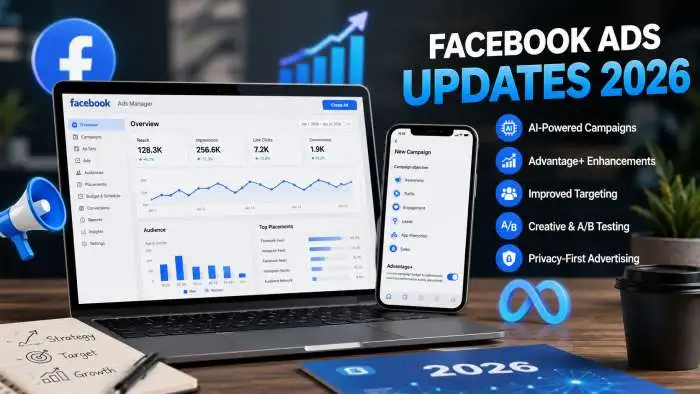
Facebook Ads in 2026: 7 Major Meta Updates You Can't Ignore
The facebook ads updates 2026 focus on artificial intelligence, playful ad formats, and greater control for advertisers. Meta is consolidating targeting options while expanding generative AI tools, introducing AR ads and video polls, and adding new features like profit-based ROAS optimization and dayparting. The platform is shifting toward automated...
Use the New Yoast SEO Bulk Editor to Speed Up Optimization
Managing SEO for a large website often feels like a never-ending task. With hundreds of posts, pages, or products, updating SEO titles and meta descriptions one by one is a huge time drain. The New Yoast SEO Bulk Editor solves this problem by allowing you to manage...
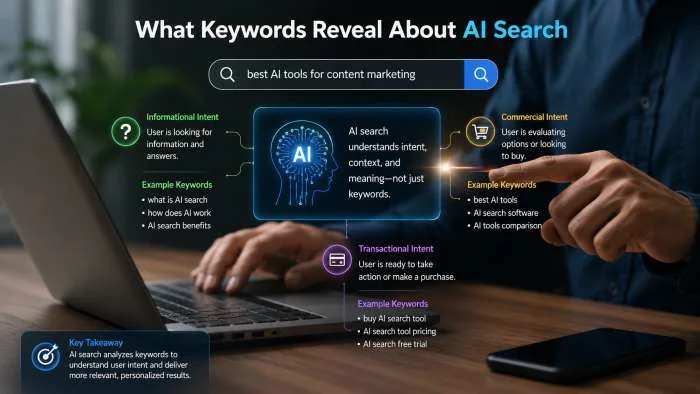
What Keywords Reveal About AI Search: Decoding User Intent in LLMs
The way people search online has changed. Short three-word searches are becoming less common. Instead, users ask complete questions. They type full sentences into search bars. They describe their problems in detail. What keywords reveal about AI search is that human behavior is shifting. People want direct...