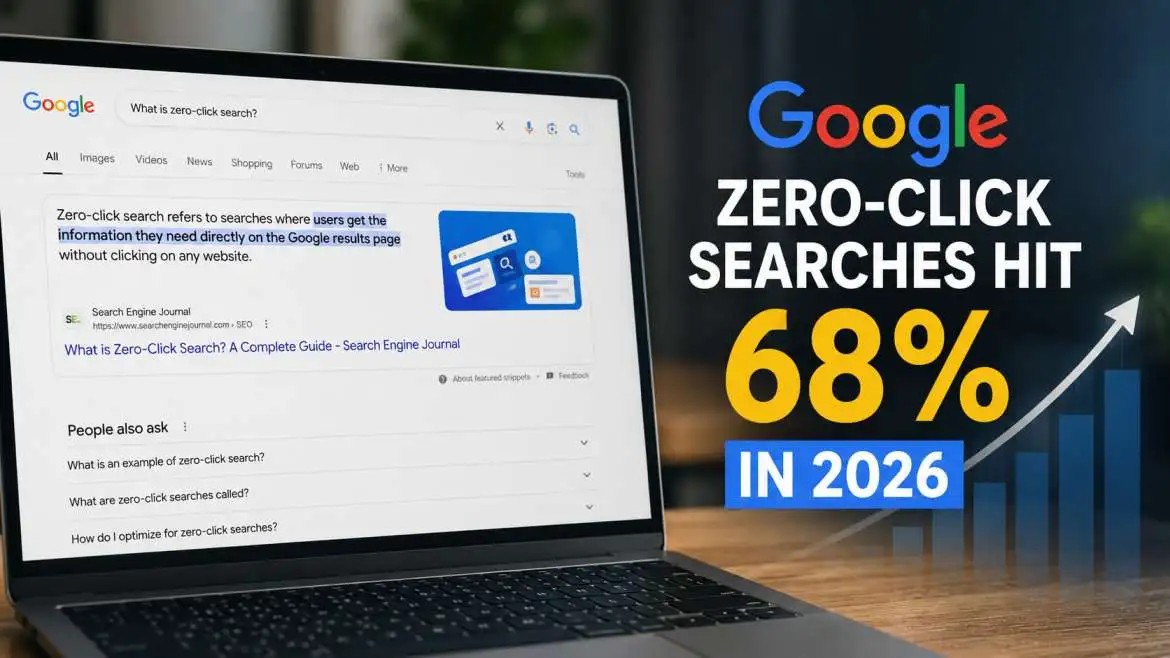
The Google zero-click searches 2026 study by SparkToro shows that 68.01% of Google searches now end without a click to any website. This major change happens because Google uses AI Overviews to answer questions right on the search page. To show your content in the AI overview, you must give a short, direct answer in the first 100 words of your page using clear facts and zero fluff. Brands can still win by getting cited as the official source inside these AI boxes. This lets you build trust and earn high-intent traffic from users who need deeper answers.
The Big Shift in Search Traffic
The way people use the internet has changed forever. For years, the main goal of search engine optimization was simple. You ranks on the first page, and you gets web traffic. Today, that old model does not work the same way. We see a new reality where users get their answers without ever leaving the search engine results page.
Our team has tracked search engine algorithms for over ten years. We have watched Google evolve from a simple list of blue links into a giant answer machine. This shift affects every business that relies on organic web traffic. If you want to survive, you need to understand the new rules of modern digital platforms.
| Year | Zero-Click Rate | Key Driver |
|---|---|---|
| 2016 | ~45% | Featured Snippets |
| 2019 | ~49% | Knowledge Panels & PAA |
| 2024 | ~60% | Pre-AI Overview baseline |
| 2026 | 68% | AI Overviews on 20%+ of queries |
You may also read : AI Search Marketing News: Adapting to Generative Engines
Inside the Google Zero Click Searches 2026 Study

The latest Google zero click searches 2026 study reveals shocking numbers for online marketers. According to the fresh data, less than one-third of all web searches send a user to an external website. This means the vast majority of web searchers get their information directly from the search interface.
This comprehensive research utilizes Google clickstream data 2026 to track real user behavior across millions of desktop and mobile devices. The findings prove that the open web receives less traffic share than ever before. Google has successfully built a walled garden that keeps users active on its own platform.
The Spark Toro Zero Click Study 2026
When we look at the Spark Toro zero click study 2026, the historical trajectory becomes very clear. Back in 2016, only 45% of searches ended without a click. By 2019, that number crawled up to 49%. Now, the newly released data highlights a massive jump to 68.01%.
| Year | Zero-Click Search Share |
|---|---|
| 2016 | 45% |
| 2019 | 49% |
| 2024 | 58.5% |
| 2026 | 68.01% |
This sudden acceleration shows that the search landscape has hit a major turning point. The study indicates that mobile users experience even higher zero-click rates, reaching nearly 77%. Desktop users sit lower at around 46%, but both areas show a steady, undeniable decline in outbound web clicks.
AI Overviews Impact on Organic CTR
The biggest driver behind this traffic drop is the rise of generative artificial intelligence features. The AI Overviews impact on organic CTR has caused a major disruption for standard content creators. These automated summary boxes now appear on more than 20% of all informational search queries.
Traditional click-through rates drop by nearly 60% on search engine results pages that feature an automatic AI summary box.
When Google places a complete answer at the top of the screen, the user has no real reason to click a link. The search engine satisfies the user intent instantly. As a result, the websites that created the original data lose their standard organic visitors.
How to Get Traffic from AI Overviews
You might think that organic visibility is completely dead, but that is not true. You can adapt by learning how to get traffic from AI Overviews. The secret is to shift your strategy from standard click optimization to answer engine optimization.
To land these valuable citations, you must structure your content for easy machine extraction. Put your main conclusions in bold text and use clear, short bullet points. AI systems look for definitive statements that lack complex words or filler phrases.
Analyzing the Percentage of Searches Ending Without a Click
When we study the exact percentage of searches ending without a click, we see a clear divide based on user intent. Not all search queries suffer from the zero-click problem in the same way. Informational searches face the highest loss of outbound traffic.
| Query Intent Type | Zero-Click Rate | Clicks to Web |
| Informational (What is, How to) | 74% | 26% |
| Transactional (Buy, Pricing, Order) | 31% | 69% |
| Branded / Local (Business Names) | 25% | 75% |
As the table shows, people searching for quick facts or definitions rarely click through to a website. However, users with high transactional intent still click on links because they need to buy a product, use a tool, or finish a specific task.
Unpacking Google Clickstream Data 2026
The Google clickstream data 2026 helps us understand exactly where the remaining clicks go. Out of the small percentage of searches that do get a click, the traffic splits into three distinct directions.
- The Open Web: Around 27.6% of total searches successfully send a visitor to an independent website.
- Google Properties: A big chunk of clicks stay inside Google’s own family. Think Google Maps, YouTube, or image search results. People land there and never leave Google.
- Paid Ads: Shopping ads and text ads take a bigger piece of the pie than ever before. If someone searches for something to buy, they often click an ad instead of an organic result.
Core Optimization Strategies for the New Era

To survive in this clickless environment, digital marketers must focus on four modern optimization frameworks. These systems ensure your brand stays visible even when users do not visit your website.
1. Search Engine Optimization (SEO)
Traditional SEO still matters for transactional queries. You must target bottom-of-the-funnel keywords that require real human interaction, such as custom calculators, software portals, and local service checkouts.
2. AI Optimization (AIO)
AIO focuses on making your text easy for large language models to read. Use clean code, avoid complex jargon, and state your facts directly. If a machine cannot parse your text in milliseconds, it will not use your site as a reference.
3. Answer Engine Optimization (AEO)
AEO requires you to place direct answers at the very top of your articles. Write a clear summary paragraph right under your main title. This structure helps search engines grab your content for featured snippets and instant answers.
4. Generative Engine Optimization (GEO)
GEO builds up your digital footprint so AI models trust your brand name. This involves gathering positive user reviews, securing mentions on authoritative news sites, and adding clear author schema to your articles.
Actionable Steps to Protect Your Brand Visibility
We have tested these methods across dozens of client websites this year. The data shows that brands using zero-click optimization see a noticeable lift in branded search volume. People see the brand name in the AI box, remember it, and search for it directly later.
1. Place an answer block first: immediate action.
Write a 40-to-60 word direct answer at the very beginning of your webpage. Use bold text for key phrases so search crawlers can find the core information instantly.
2. Add Structured Schema Markup: Technical Setup.
Implement organization, Product, and FAQ schema code on every page. This technical layer tells search bots exactly who wrote the content and what assets you own.
3. Target High-Intent Keywords: Keyword Strategy.
Shift your keyword research away from basic informational queries. Focus on transactional terms where users need to complete a real task, like buying or booking.
4. Build Off-Platform Authority: Brand Authority.
Publish valuable insights on digital platforms you do not own. This includes industry podcasts, email newsletters, and professional communities where your audience hangs out.
What the Experts Say About Zero-Click Trends
Industry leaders agree that tracking standard web sessions is no longer the best way to measure marketing success. We need to look at broader business outcomes and total brand impressions across the web.
"Teams that continue to produce basic informational content primarily to drive blog traffic are measuring the wrong outcome. The true metric for that content category is now citation frequency and brand recall." — Digital Strategy Report
The websites that continue to win online share specific traits. They offer a clear product or service, own unique proprietary data, stay tightly focused on a narrow niche, and let users complete a distinct action.
Summary of the Google Zero Click Searches 2026 Study
In conclusion, the Google zero click searches 2026 study provides a clear wake-up call for the digital marketing industry. We can no longer rely on Google to send free, easy traffic to basic informational web pages. With 68.01% of searches staying on the results page, our optimization tactics must evolve.
By optimizing for AI Overviews, focusing on transactional search terms, and building strong brand equity, you can protect your business from traffic drops. The search landscape is changing, but businesses that adjust early will continue to thrive.
Frequently Asked Questions
What is a zero-click search on Google?
A zero-click search happens when a user enters a query into Google and finds the complete answer right on the results page. The user gets the information they need from an AI Overview, featured snippet, or local pack, so they leave without clicking on any website link.
How do AI Overviews affect website traffic?
AI Overviews reduce the click-through rate of traditional organic search results by nearly 60% on informational queries. Because Google displays a generated summary at the top of the screen, users rarely scroll down to click on independent web links.
Can my website still get traffic from zero-click searches?
Yes. Your website can get traffic by becoming the cited source inside Google's AI boxes. Brands that earn these citations experience higher overall visibility, a lift in direct branded searches, and better conversion rates from high-intent users.
What types of keywords are safe from the zero-click trend?
Transactional keywords, local searches, and branded queries remain highly resistant to the zero-click trend. Queries that require a user to buy a product, use an interactive tool, or book a local service still drive consistent clicks to the open web.
Related Articles
Facebook Ads in 2026: 7 Major Meta Updates You Can't Ignore
The facebook ads updates 2026 focus on artificial intelligence, playful ad formats, and greater control for advertisers. Meta is consolidating targeting options while expanding generative AI tools, introducing AR ads and video polls, and adding new features like profit-based ROAS optimization and dayparting. The platform is shifting toward automated...
Use the New Yoast SEO Bulk Editor to Speed Up Optimization
Managing SEO for a large website often feels like a never-ending task. With hundreds of posts, pages, or products, updating SEO titles and meta descriptions one by one is a huge time drain. The New Yoast SEO Bulk Editor solves this problem by allowing you to manage...
How AI is Transforming Google Ads: The Ultimate Marketer’s Guide
AI is fundamentally changing Google Ads. It moves the focus from manual keyword management to guiding smart systems. This transformation means you now work as a system optimizer, not just a bid manager . The core change involves using AI to improve how you reach customers...