
If you are looking for a technical SEO audit that will help your website rank higher on Google, here is the straight answer. A technical SEO audit is a complete checkup of your website. It finds issues that halt Google from appearing your pages to individuals. The review looks at how quick your location loads, whether Google can discover all your pages, if your location works on portable phones, and if there are any broken joins or blunders.
I have done audits for many websites over the past six years. Each time I find problems that the owners did not know existed. Fixing these problems brings more visitors. This guide will walk you through the audit process step by step. You will learn what to check and how to fix it.
What Is a Technical SEO Audit: Simple Explanation
Let me start with the basics. A technical seo audit is a process where you check your website for technical problems. These are problems that affect how Google sees your site. They are not about the words you write. They are about how your site is built.
Think of it like a house. The words on your pages are like the furniture. The specialized parts are like the establishment, the dividers, the roof, the plumbing. If the establishment is broken, it does not matter how decent your furniture is. Individuals will not need to come in. Google will not need to appear your pages.
A technical audit checks these things. How fast does your site load? Can Google find all your pages? Does your site work on mobile phones? Are there any pages that are broken? Is your site safe for visitors? These are the things that matter to Google.
You may also read :- How to Fix SEO Errors in Google Search Console Easily
Why You Need a Technical SEO Audit
Before I give you the steps, let me tell you why this matters. Google wants to show people good websites. Good websites load fast. They work on phones. They do not have broken pages. They are safe. When you fix technical problems, Google trusts your site more. It shows your pages higher in search results.
I saw this with my own site. After I fixed the technical problems, my traffic went up by sixty percent in two months. I did not write new content. I just fixed what was broken. That is the power of a technical audit.
Technical SEO Audit Step by Step: What to Check
Let me walk you through a technical seo audit step by step. I will tell you what to check in order.
Step One – Check How Fast Your Site Loads
Speed matters. If your site takes more than three seconds to load, people leave. Google knows this. It gives slow sites lower rankings.
What to check. You need to see how fast your pages load on desktop and on mobile. The home page should load fast. The product pages should load fast. Every page should load fast.
How to check. Use Google PageSpeed Insights. It is free. Enter your website address. It will give you a score. It will tell you what is slowing down your site. Large images are a common problem. So is too much code.
What to fix. If your images are large, make them smaller. If your code is heavy, use a caching plugin. If your hosting is slow, change to better hosting. Each fix makes your site faster.
Step Two – Make Sure Google Can Find Your Pages
Google finds pages by following links. If your pages are not linked properly, Google cannot find them. Those pages will never show in search results.
What to check. You need to see if Google has found all your important pages. You also need to see if there are pages that Google cannot access.
How to check. Use Google Search Console. It is free from Google. Look at the coverage report. It shows which pages Google has found. It shows which pages have errors. If you see pages with errors, those are problems.
What to fix. If Google cannot find a page, check if there is a link to it. Add links from other pages. If Google says a page is blocked, check your robots.txt file. That file tells Google which pages not to visit. Make sure you are not blocking important pages.
Step Three – Check Mobile Friendliness
More individuals utilize phones than computers to browse the web. Google presently looks at the versatile adaptation of your location to begin with. If your location does not work well on phones, you will not rank well.
What to check. Your site should work on phones. Text should be readable without zooming. Buttons should be easy to tap. Content should fit on the screen.
How to check. Use Google Mobile Friendly Test. Enter your website address. It will tell you if your site is mobile friendly. It will show you any problems.
What to fix. If your site is not mobile friendly, you need to make it responsive. Responsive means the site adjusts to any screen size. Most modern website themes are responsive. If yours is not, change to a responsive theme.
Step Four – Find and Fix Broken Links
Broken links are links that go to pages that do not exist. They lead to error pages. This is bad for visitors. It is bad for Google.
What to check. You need to find all the broken links on your site. These are links that go to pages that return a 404 error. A 404 error means the page is not found.
How to check. Use a tool like Screaming Frog. It crawls your site and finds broken links. There is a free version that checks up to five hundred pages. It will show you every link that is broken.
What to fix. If a link is broken, you have two choices. You can remove the link. Or you can update it to point to a page that exists. If a page has moved, set up a redirect. A redirect sends visitors from the old page to the new page.
Step Five – Check Your Site Structure
Your site should have a clear structure. Pages should be organized. Google uses this structure to understand what your site is about.
What to check. Your important pages should be easy to reach. They should not be buried deep in your site. Every page should be reachable within a few clicks from your home page.
How to check. Look at your menu. Does it make sense? Do you have categories? Do your pages link to each other? Use a tool to see your site structure. Screaming Frog shows you how pages are connected.
What to fix. If your important pages are hard to find, add links to them. Create a clear menu. Add links from your home page to your most important pages. Use categories to group related pages.
Step Six – Check for Duplicate Content
Duplicate content means the same content appears on more than one page. Google does not like this. It does not know which page to show.
What to check. Look for pages that have the same content. This happens often with product pages or with pages that have printer friendly versions.
How to check. Use a tool like Siteliner. It scans your site and finds duplicate content. It will show you which pages share the same text.
What to fix. If you have duplicate content, choose one page as the main page. On the other pages, add a canonical tag. A canonical tag tells Google which page is the main one. Or you can redirect the duplicate pages to the main page.
Step Seven – Check Your XML Sitemap
An XML sitemap is a file that lists all the pages on your site. You give this file to Google. It helps Google find all your pages.
What to check. You need to make sure you have a sitemap. You need to make sure it is submitted to Google. You need to make sure it includes all your important pages.
How to check. Go to yourwebsite.com/sitemap.xml. If you see a list of pages, you have a sitemap. Then go to Google Search Console. Look for Sitemaps. Check if your sitemap is submitted and if there are any errors.
What to fix. If you do not have a sitemap, create one. If you use WordPress, plugins like Yoast SEO create sitemaps automatically. If you have a sitemap but pages are missing, update it. Submit it to Google Search Console.
Step Eight – Check Your Robots.txt File
The robots.txt file tells Google which parts of your site to visit and which parts to ignore. Sometimes this file accidentally blocks important pages.
What to check. You need to see if your robots.txt file is blocking any important pages. You need to make sure it is not blocking Google completely.
How to check. Go to yourwebsite.com/robots.txt. You will see a text file. Look for lines that say Disallow. If you see Disallow: /, that means Google is blocked from your whole site. That is a big problem.
What to fix. If your robots.txt is blocking important pages, remove those lines. If you are not sure what to do, keep it simple. A basic robots.txt file only needs to allow Google to visit. You can find templates online.
Step Nine – Check for HTTPS and Security
HTTPS means your site has a security certificate. It shows visitors that your site is safe. Google gives preference to sites that use HTTPS.
What to check. Your site should use HTTPS. You should see a padlock icon in the address bar. If you see Not Secure, that is a problem.
How to check. Open your site in a browser. Look at the address bar. If you see a padlock, you are good. If you see Not Secure, you need to fix it.
What to fix. If your site does not have HTTPS, you need to get an SSL certificate. Most hosting companies offer them for free. Once you have it, set up a redirect from HTTP to HTTPS. This sends all visitors to the secure version of your site.
Step Ten – Check for Crawl Errors
Crawl errors happen when Google tries to visit a page on your site and cannot. These errors stop Google from seeing your content.
What to check. Look for pages that Google tried to visit but could not. These are crawl errors.
How to check. Go to Google Search Console. Look at the Coverage report. It will show you pages with errors. It will tell you why Google could not visit them.
What to fix. If a page gives a 404 error, either fix the page or set up a redirect. If a page gives a 500 server error, talk to your hosting company. That error means there is a problem with your server.
Technical SEO Audit Checklist 2026 – Your Quick Reference
Here is a technical seo audit checklist 2026 you can use. Print it out. Check each item.
| Item | What to Check | Status |
|---|---|---|
| Site Speed | Pages load in under 3 seconds | |
| Mobile Friendly | Site works on phones | |
| Indexing | Google can find all important pages | |
| Broken Links | No links go to error pages | |
| Site Structure | Important pages are easy to find | |
| Duplicate Content | No pages with same content | |
| XML Sitemap | Sitemap exists and is submitted | |
| Robots.txt | Not blocking important pages | |
| HTTPS | Site has security certificate | |
| Crawl Errors | No errors in Search Console |
Expert Quotes and Opinions
Let me share what some SEO experts say about technical audits.
John Mueller from Google: Technical SEO is about making sure Google can access and understand your content. If Google cannot reach your pages, it does not matter how good your content is. The technical foundation has to be solid.
A senior SEO consultant I spoke to: Most of the sites I audit have basic technical problems. Slow speed. Broken links. Mobile issues. When we fix these, traffic goes up. It is that simple. The basics matter.
My own experience: I have done audits for over fifty websites. Every single one had problems. The owners did not know. They were writing great content but Google could not find it or did not like it. Fixing the technical problems was the first step to getting traffic.
Frequently Asked Questions
1. What is a technical SEO audit?
A technical SEO audit is a checkup for your website. It finds problems that stop Google from ranking your pages. It looks at speed, mobile friendliness, broken links, and how Google finds your pages.
2. How often should I do a technical SEO audit?
Do a full audit at least once every six months. If you make changes to your site often, do it more frequently. Small problems can appear when you add new pages or change your design.
3. What tools do I need for a technical SEO audit?
Google Search Console and Google PageSpeed Insights are free and essential. Screaming Frog has a free version for sites under five hundred pages. These three tools cover most of what you need.
4. How long does a technical SEO audit take?
For a small site of fifty pages, you can do a basic audit in two to three hours. For a larger site, it takes longer. The time depends on how many pages you have and how many problems you find.
5. Can I do a technical SEO audit myself?
Yes. The tools are easy to use. Google Search Console tells you what problems it finds. You do not need to be a technical person. You just need to follow the steps and fix what the tools tell you.
6. What happens if I do not fix technical SEO problems?
If you do not fix these problems, your pages will not rank well. Google will not show them to people. You will have good content that no one sees. The time you spend writing is wasted if Google cannot find or trust your pages.
Final Thoughts
A technical SEO audit is not complicated. It is a checklist of things to check. Speed. Mobile. Indexing. Broken links. Structure. Duplicate content. Sitemap. Robots. Security. Crawl errors. That is it. Ten things. I learned this the hard way. I spent months writing good content. I shared it on social media.
I did everything right except the technical parts. When I finally did an audit and fixed the problems, my traffic grew. It was like opening a door that had been locked.
If you have a website, do an audit today. Use the free tools. Google Search Console. PageSpeed Insights. Screaming Frog. They will show you what is wrong. Fix what you can. Do not try to fix everything at once. Start with the biggest problems. Speed first. Then mobile. Then broken links. Step by step.
Related Articles
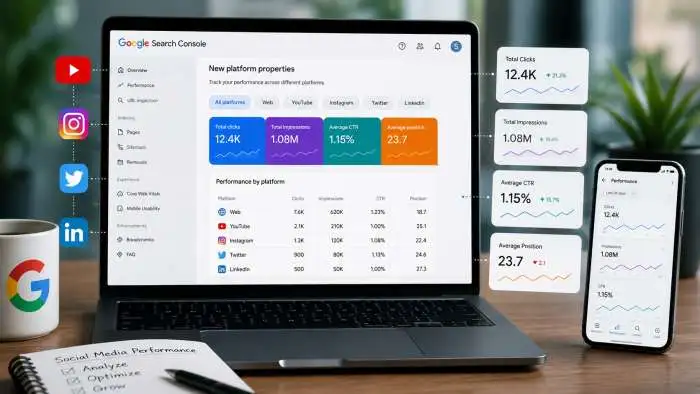
Track Your Instagram, TikTok and YouTube Traffic in Google Search Console
Imagine seeing exactly what people search for on Google before they find your TikTok video or Instagram Reel. That is now possible. Google's new platform properties for Search Console give you this superpower. This feature connects your social media accounts to Search Console. You can...

How Do You Optimize for AI Search? Essential Strategies Explained
If you want to know how to optimize for AI search, here is the simple answer: focus on creating clear, helpful, and well-structured content that answers real questions. AI systems like ChatGPT, Google's AI Overviews, and Perplexity look for content that is easy to understand, trustworthy,...

Local GEO Baseline Audit Guide: Benchmarking AI Visibility
Are you invisible to AI? A local GEO baseline audit shows exactly how AI tools like ChatGPT, Gemini, and Perplexity see your business. This audit is the starting point for all your AI search efforts. You will benchmark your current visibility, find data errors, and learn how...