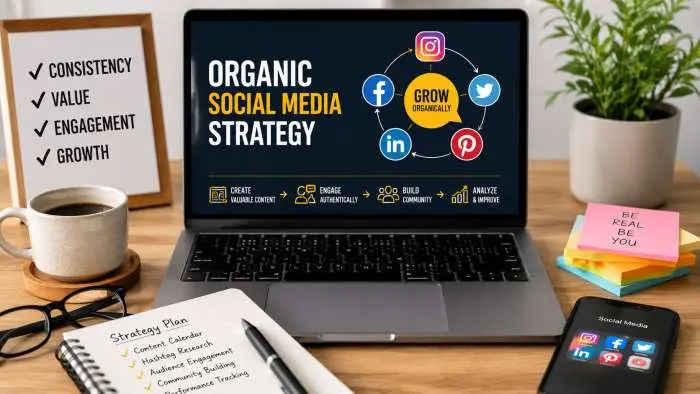
Honestly, organic social media is just about playing the long game. You aren't burning budget on ads here; you're just putting out good, free stuff that actually helps people so they stick around.
Let's be real: the old playbook of chasing cheap likes is dead. Now that everyone is using AI to search the web, you have to actually prove you know what you’re talking about to earn any real trust. Ads can get you quick attention, sure. But it’s the organic grind that actually makes people trust you enough to buy from you.
What Is an Organic Social Media Strategy?
An organic social media strategy is the roadmap for all the unpaid content you share on social networks. This includes your regular posts, videos, and stories . It differs from paid social, which is any content you pay to promote.
Why does this matter? Simple: people trust brands they feel connected to. Organic content feels more real and less like an ad. Studies show that 79% of people say user-generated content (which is organic) has a big impact on their buying decisions . An organic social media marketing strategy works like a long-term relationship. It creates a loyal audience who chooses you over the competition.
This approach is more important than ever. Recent data shows that 75% of B2B buyers and 84% of C-level executives use social media to make purchasing decisions . These decision-makers are checking your profiles to gauge your expertise long before they ever talk to a salesperson.
You may also read : How to Increase Social Media Engagement: The Complete Guide
Why Organic Is Now "Reputation Infrastructure"
The way we think about organic social media has to change. It's no longer just a free way to broadcast your message. Today, think of it as your "reputation infrastructure" . It is the foundation that shows the world who you are and what you know.
For PR and marketing pros, the important question is shifting from "How many people saw this?" to "Who saw this and why did it matter?" . Journalists, analysts, and potential partners scan your profiles to see if you are an expert. They look for consistent, thoughtful commentary on industry news. This is where organic social becomes your strongest asset. It provides a layer of credibility that is impossible to buy.
Key Elements of a Social-First Show
One powerful way to build this credibility is by creating a social-first show. This is a recurring content series that people look forward to watching . It turns your brand into a destination, not just another account in the feed.
The Four Pillars of a Social-First Show
To create a successful show, you need a structure that people can rely on.
1. Recurring Format: The show needs a recognizable structure. Even if the topic changes, the way you present it should feel familiar. This makes planning easier for you and gives your audience a "home base."
2. Recurring Theme: Plant your flag in one big idea. Every episode should tie back to your brand's core message. When the audience knows what you stand for, they will come back for more.
3. Recurring Characters: People connect with people. Make yourself the host or feature regular team members. Familiar faces build a sense of community and make the content feel authentic .
4. Recurring Set: You don't need a fancy studio. Just find a filming spot you can use consistently. A stable background makes production easier and helps viewers instantly recognize your content .
Multiplied Content, Not Multiplied Work
The great thing about a social first show is that you can make one and show it again and again. You can record one session to make one full video, and an audio podcast, and several short videos for TikTok or Instagram Reels. This is how to work as much but not as much as you can.
Choosing the right tools: Platform-Specific Breakdown.
There are no universal social media tactics that will get you a victory. You must be 'There' and make content that is relevant to that platform.
LinkedIn for Authority
LinkedIn is the professional network. Here, you build authority by sharing your expertise. "Publishing proof" is better than posting promotions . Share valuable commentary on industry trends and lead with customer-centric insights.
Instagram and TikTok for Visual Connection
These are platforms for visual storytelling. Use short-form video to demonstrate your product or share quick, helpful tips. Showing real people using your product builds trust quickly.
X (Twitter) for Real-Time Conversation
X is the place to be for breaking news and joining live conversations. Engage with journalists and share your point of view quickly. Being visible "at the right moment" can lead to media mentions and new opportunities .
Emerging Platforms and Communities
Don't forget about niche communities. Forums like Reddit are places where people go to ask questions. If you can provide helpful answers without being "salesy," you build a strong reputation that pays off over time .
Best Practices for Organic Growth in 2026

To see real results, follow these best practices. These are the "inputs" that lead to the "output" of growth .
1. Publish Proof, Not Promotions
Stop using social media like a press release. Brands who succeed share opinions and insights. They show they are experts, not just sellers . This is one of the most important best practices for organic growth. When a customer asks an AI tool a question, you want your insightful content to be the answer.
2. Activate People, Not Logos
People trust people more than brand logos . Encourage your employees to share their expertise. This is called employee advocacy. A coordinated group of real people sharing insights carries more weight than a single corporate account. Set up a "content pantry" with pre-approved updates, but always let employees add their own twist .
3. Embrace Short-Form Video
Short-form video is a powerful signal of authority. A quick 60-second "how-to" video or whiteboard explainer shows that you know your stuff. This type of content is engaging and easy to repurpose.
4. Measure the Right Things
Stop looking at vanity metrics like likes and impressions. Focus on "relationship signals." These include journalist follows, direct messages, repeat citations, and comments that lead to real conversations . These are the metrics that show your organic social media strategy is actually building authority.
5. Be Consistent
Consistency builds trust. Whether you post once a day or three times a week, stick to a schedule. A social-first show thrives on the audience knowing when to tune in.
Conclusion
An organic social media strategy is an investment for the long term, where the added value of your brand's credibility is invested. It's the free, potent engine for trust and attracting the right people. You can establish the groundwork for a successful campaign by keeping in mind the role of value, having a “social first” mindset and learning about the best practices for engaging in organic growth. It doesn't need a lot of money; it simply needs a commitment to coming along and passing on your knowledge.
Frequently Asked Questions
What is the main purpose of organic social media?
The main purpose is to build trust and community. It is a free way to show your expertise and build relationships with potential customers. This is in contrast to paid social, which is used to drive immediate conversions .
Why is an organic social media strategy important?
It is important because it provides credibility that you can't buy. As AI tools become the new search engines, your organic content is often the information they use to answer user questions . It helps you get discovered.
How can I build a social-first show?
Start with the four pillars: a recurring format, a recurring theme, recurring characters, and a recurring set. You can easily repurpose a single recording session into many pieces of content .
Related Articles
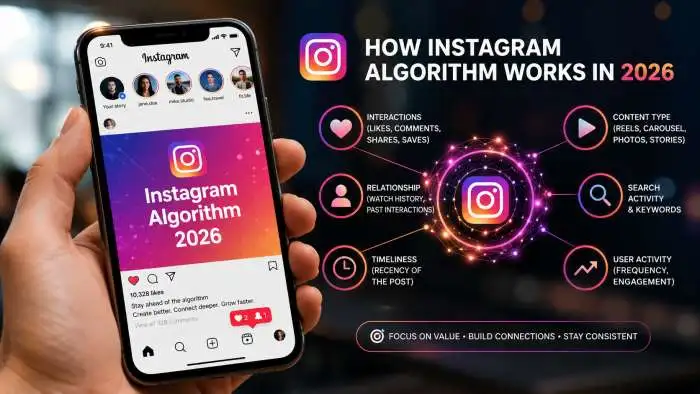
Instagram Algorithm Changes 2026: Why Your Reach Dropped (And How to Fix It)
The Instagram algorithm 2026 is no longer a single system but a group of AI ranking models that decide what content users see first across Feed, Reels, Stories, and Explore. In 2026, the system prioritizes private shares (sends), watch time, and likes per reach over total follower...
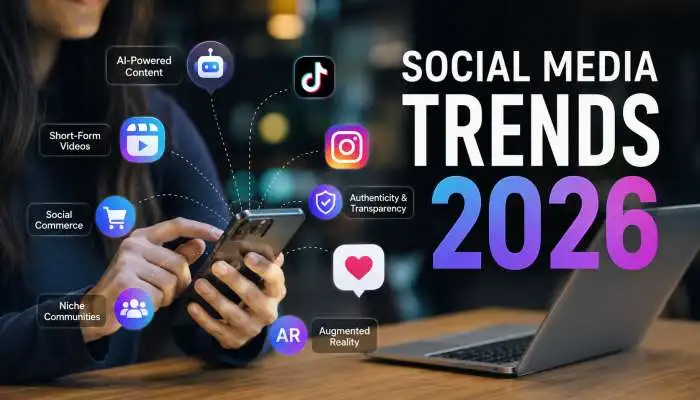
Social Media Trends 2026: Simple Ways to Grow Your Audience
Welcome to social media in 2026. It is a place that feels like many smaller worlds rather than one big, shared online space. The biggest change? People want to build tight communities, not just chase followers. They seek real connections and truthful content. Algorithms now reward...
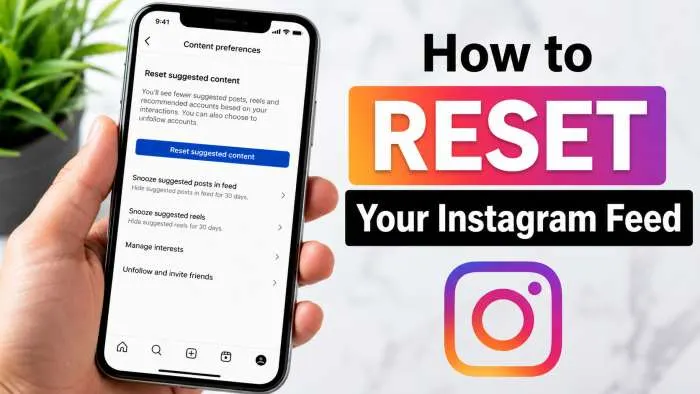
How to Reset Your Instagram Feed: Improve Your Explore Page
Want to know how to reset instagram algorithm and get a clean feed? Just wipe your search history, like the posts you actually enjoy, and tap "Not Interested" on the junk. Instagram does not have a magic reset button, but you can train the app to behave...