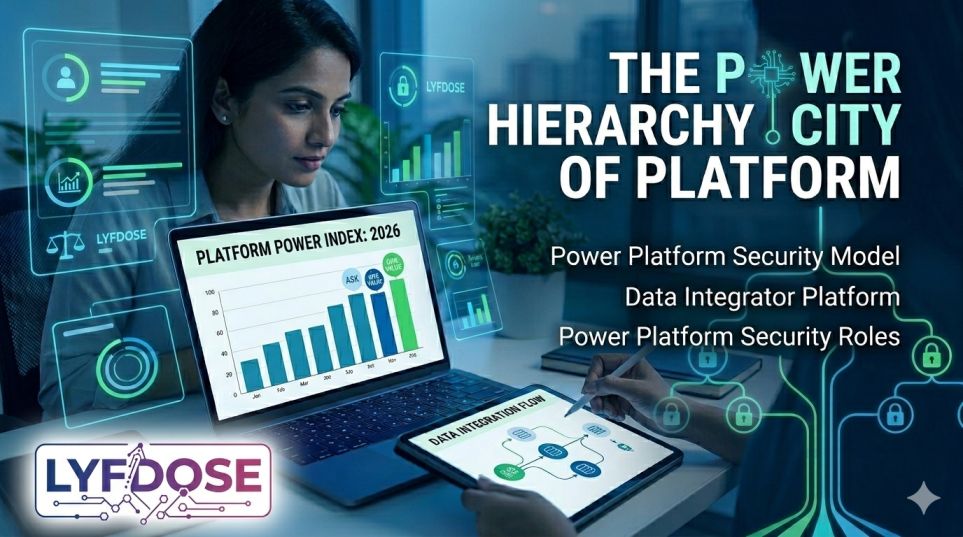
The digital landscape in India has reached a fever pitch. We aren't just fighting for "eyeballs" anymore; we are fighting for sovereignty over data and distribution. Understanding The Power Hierarchy of Platform is no longer just a "nice-to-have" for mid-market brands—it’s the mechanical reality that separates those scaling to ₹100 Crore from those burning out in the CAC (Customer Acquisition Cost) furnace. By 2026, the hierarchy has flipped: it’s no longer a vanity contest about who has the most users, but a strategic war over who controls the highest concentration of "intent."
Key Takeaways
- Intent Trumps Reach: A platform's power is measured by how close it sits to the final transaction.
- Security is Growth: Governance isn't a "back-office" task; it is the foundation of high-scale performance marketing.
- The Bharat Factor: Regional language dominance is flipping the traditional social hierarchy on its head.
The New World Order: Defining the Power Hierarchy of Platforms

When we look at the Power Hierarchy of Platforms in the current Indian context, we see a vertical shift. At the top sits the "High-Trust" layer (WhatsApp, YouTube), followed by the "Discovery" layer (Instagram, Moj), and finally the "Utility" layer (Blinkit, Google Search).
Real-World Scenario: The D2C Fragrance Pivot
A luxury perfume brand launched exclusively on Instagram. They hit a wall at ₹10 Lakh in monthly sales. Why? Discovery was high, but trust was low. By shifting their Power Hierarchy of Platforms strategy to prioritize YouTube unboxings and WhatsApp-based scent consultations, they tripled their conversion rate in 90 days. They moved from a "look at us" platform to a "talk to us" platform.
Hot Take: Google Search is no longer the "top" of the hierarchy. For the modern Indian consumer, search happens inside the social app or the quick-commerce app. If you aren't optimizing for "Blinkit SEO," you’re already invisible.
Under-the-Hood: The Algorithm of Influence
Technically, platform power is dictated by "Data Portability." Can you get your audience off the platform? Meta's power lies in its closed-loop ecosystem. WhatsApp’s power lies in its open-ended engagement. We track this via the Data Integrator Platform—a middleware layer that connects social intent to CRM reality. Without this integration, your platform power is just a vanity metric.
Pro-Tip: Audit your platform spend every 30 days. If your "Discovery" platforms aren't feeding your "High-Trust" channels via automated flows, you’re just donating money to Mark Zuckerberg.
Infrastructure as Power: The Power Platform Security Model
You cannot build a skyscraper on a swamp. In marketing, your data is your skyscraper. The Power Platform Security Model is what keeps your customer data safe from competitors and bad actors. In 2026, with the India DPDP Act in full swing, a single data leak can bankrupt a D2C brand.
Case Study: The Lead-Gen Leak
A mid-sized fintech firm in Gurugram ignored their Power Platform Security Model. They gave "Global Admin" rights to a third-party agency. Within weeks, their high-intent lead data was being sold to rivals on Telegram. The cost? A ₹2 Crore fine and a 40% drop in brand trust scores.
Hot Take: Marketing "Culture" is often at odds with "Security." Marketers want fast access; IT wants locked doors. The winners in 2026 are the ones who realize that Power Platform Security Roles are actually a performance tool. They allow you to scale your team without scaling your risk.
Technical Depth: Environment Isolation
Under the hood, this involves setting up "Data Loss Prevention" (DLP) policies. It’s about ensuring that a Data Integrator Platform can pull lead info from Facebook but cannot accidentally push your internal "Cost Per Lead" (CPL) spreadsheets to a public-facing cloud. It’s about siloed environments—Dev, Test, and Production—even for simple marketing automations.
The Governance Edge: Power Platform Security Roles
Scaling a digital marketing team is messy. You have media buyers, content creators, and data analysts all touching the same "Power" systems. This is where Power Platform Security Roles become your best friend.
- The Media Buyer: Access to ad spend and creative, but zero access to the customer email database.
- The Data Scientist: Read-only access to raw data, but no permission to change campaign budgets.
- The Agency Partner: Limited to specific "Environments" with no visibility into the brand’s broader P&L.
The "Anti-LLM" Filter: Why "Clean" Data Beats "Big" Data
Most generic advice says "collect everything." We say: "Protect what you collect." If your Power Platform Security Roles are a mess, your data is "dirty." Dirty data leads to hallucinating AI models and wasted ad spend. It’s that simple.
Hot Take: The "Manager vs. Position" hierarchy is a relic of the 90s. In 2026, we've moved to Attribute-Based Access Control (ABAC). You don't get digital keys just because of a title on your business card; you get them because of the specific task you're executing right now. It’s cleaner, leaner, and infinitely safer.
Pro-Tip: Lean hard into the "Principle of Least Privilege". Give every team member—from your intern to your co-founder—the absolute bare minimum access required to do their job. This isn't a lack of trust; it’s essential operational hygiene in a high-stakes environment.
Unifying the Flow: The Data Integrator Platform

A brand is only as strong as its weakest link. For most, that link is the gap between social media and the warehouse. The Data Integrator Platform is the bridge. It’s the software that ensures when a user clicks a "Buy Now" button on a WhatsApp survey, the order is instantly reflected in the inventory system.
Real-World Scenario: The Viral "Stock-Out"
A D2C skincare brand went viral on a Tuesday. By Wednesday morning, they had 5,000 orders. Because they lacked a robust Data Integrator Platform, their Shopify didn't talk to their warehouse in Bhiwandi. They oversold by 2,000 units. The result was a PR nightmare of refunds and "Where is my order?" comments on Instagram.
Hot Take: "Going Viral" is a risk, not just a reward. If your integration layer isn't elastic, virality will break your business. You need a platform that can scale horizontally in seconds, not hours.
Technical Depth: API Rate Limiting
Under the hood, a Data Integrator Platform manages the "Handshake" between different APIs. It handles rate limiting—ensuring that your CRM doesn't crash when Meta sends 1,000 leads per minute. It also manages "Data Transformation"—converting a Facebook Lead Form's weird formatting into a clean entry for your SQL database.
The AEO Imperative: Optimizing for 2026 Search
The Power Hierarchy of Platform is shifting toward "Answer Engines." Users are asking Gemini and ChatGPT for recommendations. To win here, your content can't just be "SEO friendly"—it must be "Citation Ready."
- Structured Data: Use JSON-LD to tell AI models exactly what your product does.
- Direct Answers: Write in a way that an AI can easily scrape for a "Snapshot."
- Expert Citations: Link to verified sources (like the official DPDP Act documentation) to build "Trust" with the algorithm.
Pro-Tip: Look at your "Search Console" for long-tail questions. If you see people asking "How to secure D2C data in India?", create a dedicated FAQ page for that specific query. AI loves FAQs.
FAQ: Dominating the Platform Hierarchy
Q: Which platform sits at the top of the hierarchy for ROI in India?
A: Currently, WhatsApp. It has the highest open rates and the shortest path to payment. However, it requires a "High-Trust" foundation built on YouTube or Instagram.
Q: Is the Power Platform Security Model relevant for small startups?
A: More than ever. Small brands are the biggest targets for hackers because their security is usually non-existent. Start with basic Power Platform Security Roles from day one.
Q: What is a Data Integrator Platform exactly?
A: Think of it as the "Glue" for your tech stack. It’s a tool like Zapier, Make, or a custom-built API layer that moves data between your social apps, your website, and your CRM.
Q: How does the India DPDP Act affect my marketing?
A: It mandates that you must have a legal basis for every piece of data you collect. This makes the Power Hierarchy of Platform even more critical—you need to know exactly where your data is coming from and who has access to it.
Final Word: The Sovereign Marketer
In 2026, we don't just "buy ads." We build ecosystems. By mastering The Power Hierarchy of Platform, securing your infrastructure, and integrating your data flows, you move from being a tenant on someone else's land to being the sovereign of your own brand.
Stop chasing the algorithm. Start building the architecture. Are you ready to take the top spot?
Related Articles
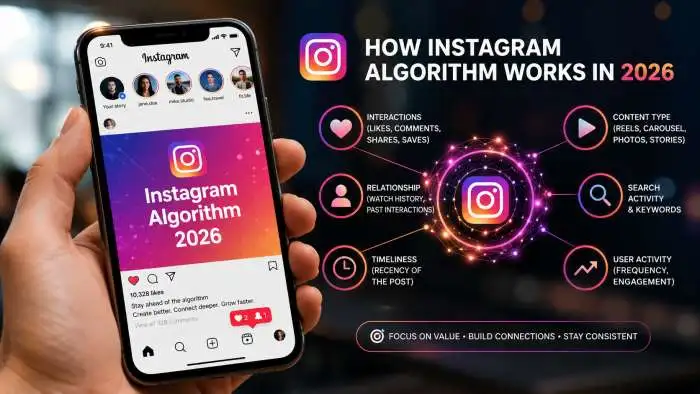
Instagram Algorithm Changes 2026: Why Your Reach Dropped (And How to Fix It)
The Instagram algorithm 2026 is no longer a single system but a group of AI ranking models that decide what content users see first across Feed, Reels, Stories, and Explore. In 2026, the system prioritizes private shares (sends), watch time, and likes per reach over total follower...
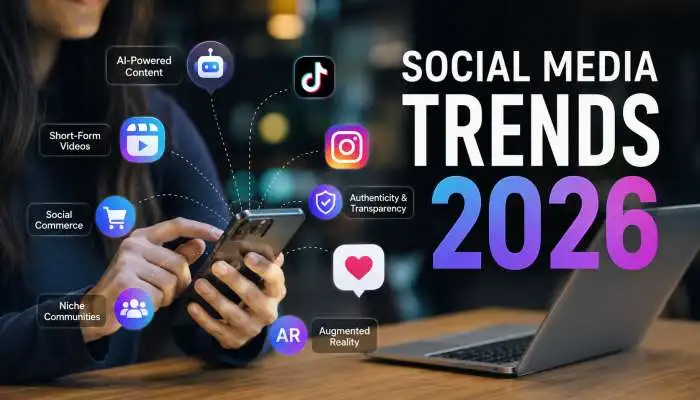
Social Media Trends 2026: Simple Ways to Grow Your Audience
Welcome to social media in 2026. It is a place that feels like many smaller worlds rather than one big, shared online space. The biggest change? People want to build tight communities, not just chase followers. They seek real connections and truthful content. Algorithms now reward...
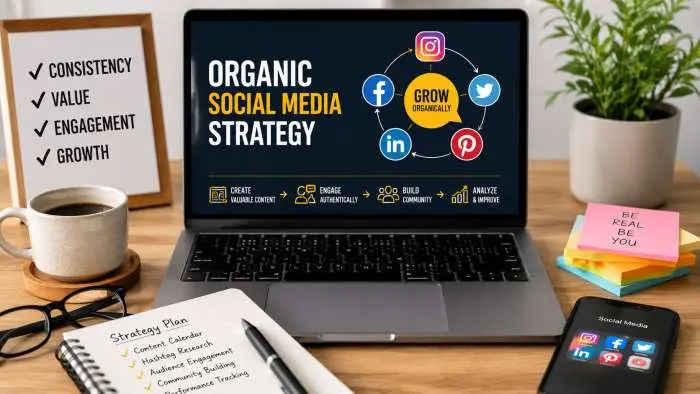
Easy Organic Social Media Strategy: Grow Your Brand Without Ads
Honestly, organic social media is just about playing the long game. You aren't burning budget on ads here; you're just putting out good, free stuff that actually helps people so they stick around. Let's be real: the old playbook of chasing cheap likes is dead. Now...