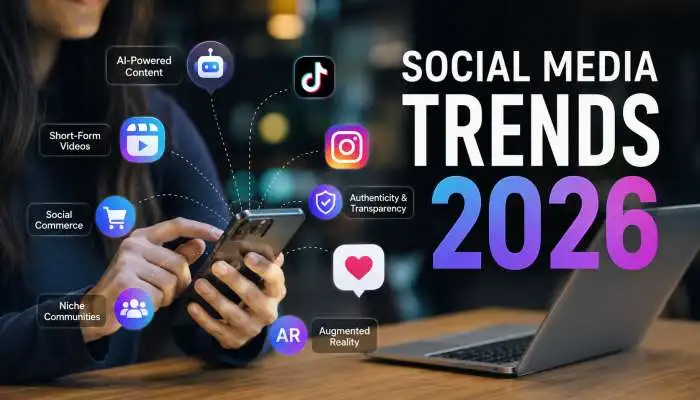
Welcome to social media in 2026. It is a place that feels like many smaller worlds rather than one big, shared online space. The biggest change? People want to build tight communities, not just chase followers. They seek real connections and truthful content. Algorithms now reward genuine interaction over flashy stunts. This new focus on Human-First Authenticity is the most important social media trends 2026. Here’s what you need to know to thrive in this new, more personal digital world.
Defining the Core Social Media Trends 2026
To understand the current digital landscape, look beyond the surface. Social media trends 2026 are about a fundamental change in how we act online. It's a move from broadcasting a message to building a community.
The Human-First Authenticity Push is Reshaping Platforms
People are tired of seeing fake, overly polished content. According to the Social Media Trends 2026 Hootsuite report, one-third of consumers are less likely to choose a brand that uses AI-generated ads . This does not mean AI is dead. In fact, people accept it as a useful "behind-the-scenes" tool for editing or creating drafts.
However, they reject content that feels fully made by robots . The demand is now for authentic social media content that feels honest, a bit raw, and undeniably human . We call this The Human-First Authenticity Push.
You may also read :- Easy Organic Social Media Strategy: Grow Your Brand Without Ads
What is the Social Media Algorithm Trend in 2026? It's All About You
The algorithm is evolving from a mindless force to a tool of personal discovery. Platforms like Threads, Instagram, and TikTok now let users take control. You can actually train your own algorithm . Instagram's "Your Algorithm" tool lets you see and control the topics that shape your recommendations .
Threads allows you to privately tell the app what you want to see more of (like baseball) or less of (like stressful news) for a specific period . These AI-powered algorithms are learning to understand your "micro-behaviors" and reward authentic storytelling .
The Shift from Virality to Community Economics
Chasing millions of views is out. Building a loyal "snowball" community is in. The Shift from Virality to Community Economics is a key trend. People no longer just follow influencers; they join niche groups. Platforms like STAN, an Indian startup with over 45 million users, have shown that building strong communities reduces the need for constant paid ads .
When users form relationships, distribution becomes a natural part of the user experience, leading to better monetization . This means long-term value comes from people, not just views.
Social as the Primary Search Layer
You used to "Google" everything. Now, you search on social media. Think about it: You search for product reviews, travel tips, and restaurant recommendations on social apps. In fact, roughly two-thirds of U.S. consumers have used social search . This makes Social as the Primary Search Layer a huge trend.
Meta recently launched "AI Mode" on Facebook, which pulls answers from public posts in Groups and Reels to answer your questions directly . This means your content needs to be optimized for search engines and these new AI search tools .
Visual Differentiation and Cinematic Sets
In 2026, high-quality, eye-catching visuals are more important than ever. We are seeing a rise in "cinematic" sets and high-quality productions mixed with raw, personal videos . This is where Visual Differentiation and Cinematic Sets comes in. It's not just about looking good; it's about capturing a specific mood or emotion.
The appeal is "emotional precision," where a single uninterrupted clip can perfectly capture the exhaustion after work or the calm of a slow morning . This unique visual style helps you stand out from the AI slop flooding the internet.
The 2026 Social Media Landscape: Where is it Going?
The Internet is Now Personal (The Fragmentation of Culture)
What will happen to social media in 2026? It will become highly personalized. There is no longer one single internet . You might see a feed full of sourdough starters, while your friend sees K-pop and football. This fragmentation is driven by algorithms that serve highly personalized content based on interests . The culture is all over the place. To succeed, you must understand your audience's specific generational and cultural signals .
The End of "Loud" Marketing (Authenticity Wins)
The era of the loud, salesy post is over. Audiences are sharp. They trust people more than they trust faceless brands . Brands are now expected to move fast and respond to cultural events almost instantly . This is often called "fastvertising." The most successful brands are adopting a creator mindset. They are using employee advocacy to extend their reach and show a human side. In 2026, authenticity isn't just a nice-to-have; it's a requirement.
You Control the Algorithm (Not the Other Way Around)
What is the social media algorithm trend in 2026? It's about user control. The "one-size-fits-all" TV channel is dead. The new model is like a streaming service, where you tune the recommendations to your interests . Social platforms are handing over power to users. If you see too much of something you don't like, you can now tell the platform to stop showing it to you.
How to Master Social Media Trends 2026
Navigating these changes requires a new mindset and strategy. Here’s how to adapt.
Keep It Real: Embrace the "Raw" Look
Stop over-editing! This year, imperfections are in. As Instagram head Adam Mosseri notes, as AI makes creating content easier, genuinely human stories become more valuable because they can't be replicated . Share behind-the-scenes clips. Show the mistakes. Use natural pacing. Even typos can signal authenticity and spark conversation . This is the heart of the Human-First Authenticity Push.
Build Your Own Moat: Focus on Community, Not Just Followers
As Lokesh Agarwal notes, most businesses don't have an audience; they just have reach . Organic reach on platforms can drop to around 1.5-2% . To build a real asset, you need to own your distribution. A WhatsApp group with 1,000 active members can outperform an Instagram account with 100,000 passive followers . The conversion rate for a warm audience on WhatsApp is 2-5%, compared to 0.5-2% on cold Instagram audiences . Build a community. It's your real "moat" against algorithm changes.
Become an "Experience" Creator
Stop selling. Start showing. Instead of telling people a handbag is durable, show someone overloading it with shopping . Instead of saying a lipstick lasts all day, have the creator wear it through breakfast, lunch, coffee, and dinner. People want a science experiment. In 2026, showing almost always beats telling . This is the key to Visual Differentiation and Cinematic Sets.
Conclusion
The social media trends 2026 clearly point to one central idea: the human element is your greatest strength. Chasing virality is out; building community is in. The fancy, polished ad is gone; raw, authentic storytelling is the king. The algorithm isn't a terrifying beast; it's a tool you can now command. To succeed in 2026, you must treat social media not as a loudspeaker, but as a tool for genuine connection. Be real. Be human. Build your community. That is how you win.
Frequently Asked Questions
1. What is the biggest social media trend for 2026?
The biggest trend is the Human-First Authenticity Push. People are demanding real, honest, and relatable content. They are rejecting overly polished, AI-generated posts and rewarding brands and creators who show a human touch. This is the core of the social media trends 2026.
2. How does the 2026 social media algorithm work?
In 2026, the algorithm is more user-controlled than ever. Platforms like Instagram and Threads now offer tools that let you train your own feed by telling it what topics you want to see more or less of . The algorithm prioritizes watch time, shares, and meaningful engagement over vanity metrics .
3. Why is community becoming more important than followers?
Followers are "reach" (you don't own them), but a community is an asset . Community engagement is often 10-15 times higher than public platforms, and conversion rates are significantly better. A close-knit group is a "distribution moat" that protects your business from algorithm changes .
4. Should I use AI in my social media marketing?
Yes, but use it smartly. People accept AI for behind-the-scenes work (like drafting, editing, and scheduling). However, one in three people is less likely to buy from a brand using AI-generated advertisements . Use AI as a tool, but make sure your final product has a distinctly human voice and feel.
5. What does "Social as the Primary Search Layer" mean for me?
It means you need to optimize your social posts for search. Since people now use platforms like Facebook and Instagram to find information (reviews, tutorials, tips), you should use relevant keywords and hashtags to make your content discoverable. The new AI search tools (like Meta AI) also pull from public posts to answer user questions .
Related Articles
Instagram Algorithm Changes 2026: Why Your Reach Dropped (And How to Fix It)
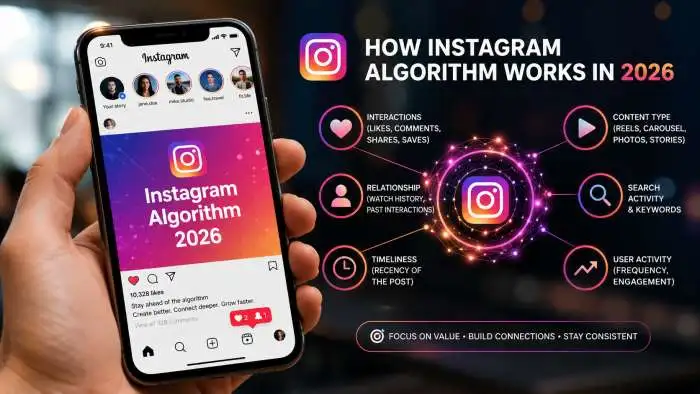
The Instagram algorithm 2026 is no longer a single system but a group of AI ranking models that decide what content users see first across Feed, Reels, Stories, and Explore. In 2026, the system prioritizes private shares (sends), watch time, and likes per reach over total follower...
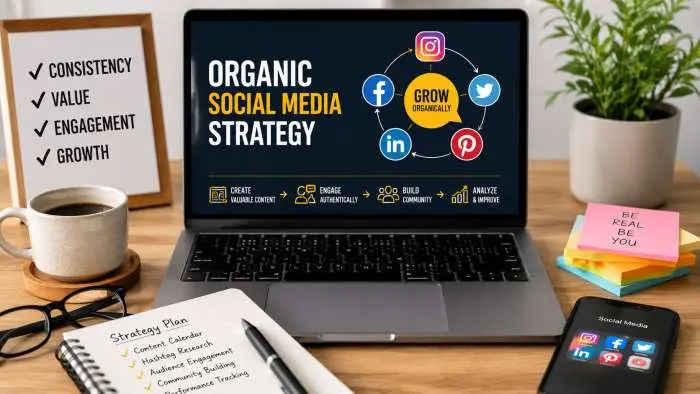
Easy Organic Social Media Strategy: Grow Your Brand Without Ads
Honestly, organic social media is just about playing the long game. You aren't burning budget on ads here; you're just putting out good, free stuff that actually helps people so they stick around. Let's be real: the old playbook of chasing cheap likes is dead. Now...

How to Reset Your Instagram Feed: Improve Your Explore Page
Want to know how to reset instagram algorithm and get a clean feed? Just wipe your search history, like the posts you actually enjoy, and tap "Not Interested" on the junk. Instagram does not have a magic reset button, but you can train the app to behave...