
Starting a new business feels a lot like pushing a boulder up a hill. You have a great product or service, but nobody knows your name yet. You have a tiny budget and a to-do list that stretches to the moon.
I have been there. I remember sitting at a kitchen table with a laptop, three empty coffee cups, and the loud pressure of needing customers. My biggest mistake? I posted random things on social media and hoped for the best. It did not work. I learned the hard way that you need a real plan.
You need a social media marketing strategy for startups. This is not about going viral overnight. It is about building a small, loyal crowd that actually buys from you. Let me walk you through exactly how to do this, step by step, without wasting your time or money.
Why Most Startups Fail at Social Media (And How You Can Win)
Look, before we hit the how-to, gotta call it straight: new biz owners screw up in three big ways, every damn time.
They jump on every platform day one—bam, Instagram, Facebook, LinkedIn, X (yeah, whatever they're calling Twitter now). Overload hits, and poof, gone in two weeks flat. Seen it a million times.
Or they just yap about their own stuff nonstop. "Buy this! Discount here! New feature alert!" Ugh, it's like that pushy guy at the market nobody wants to deal. People scroll past faster than you can say "unfollow."
Worst? Zero plan for the grind ahead. Social's no quick dash—it's the long haul. Nail a real social media marketing strategy for startups, though, and you're not flailing; you're building something that sticks and scales.
Trust me, that roadmap? It frees up your headspace, dials down the chaos, and pulls in buyers who actually give a damn about what you're slinging. Stick with me—I'll walk you through it step by step
10 Simple Steps to Social Media Marketing for Startups
You may also read :- How Social Media Benefits Individuals and Businesses Today
Step 1: Define Your Niche & Audience

You cannot talk to everyone. If you try, you will end up talking to no one. The very first job in your social media marketing strategy for startups is to Define Your Niche & Audience.
Think about the one specific person who needs your product more than anyone else. Give them a name. Let us call her Sarah. What does Sarah do on a Tuesday morning? What keeps her awake at night? What does she laugh at?
Here is an example. If you sell handmade leather bags, your niche is not "people who carry bags." That is too broad. Your niche could be "female lawyers in their 30s who need a stylish but professional work tote." See the difference?
To define your niche and audience correctly, ask yourself these three questions:
- What problem does my product solve?
- Who has that problem the most?
- Where do these people hang out online?
Once you answer these, everything else becomes easier. You will know what to post, how to talk, and even what time of day to show up.
Step 2: Build (or improve) Social Media Profiles
Your social media profile is your new storefront. Before someone buys from you, they will check your Instagram or LinkedIn page. If your profile looks empty or messy, they will leave and never come back.
So take a hard look at your current pages. Then Build (or improve) Social Media Profiles so they actually convert visitors into followers and customers.
Here is a quick checklist to fix your profiles today:
- Use a clear, high-quality logo as your profile picture
- Write a bio that explains what you do in simple words
- Add a link to your website or a special offer page
- Use the same username across all platforms so people can find you easily
- Fill out every single section, including your contact info and location
Do not leave anything blank. A complete profile tells people you are a real business that takes itself seriously. This is a small effort that pays off big time.
Step 3: Choose the Right Platforms
You do not need to be everywhere. In fact, being everywhere is a trap. The smart move is to Choose the Right Platforms based on where your audience actually spends their time.
If you sell to other businesses, LinkedIn is your best friend. If you sell trendy clothes to teenagers, you need TikTok and Instagram. If you have a local coffee shop, Facebook and Google Maps matter more than anything else.
Here is a simple table to help you choose the right platforms based on your goals:
| If your goal is... | Start with these platforms |
|---|---|
| Showing products visually | Instagram, TikTok, Pinterest |
| Building professional authority | LinkedIn, Twitter (X) |
| Creating a community group | Facebook, Discord |
| Selling B2B services | LinkedIn, Email newsletters |
| Local foot traffic | Facebook, Google Business Profile |
Pick two platforms maximum when you are just starting. Master those two before you even think about adding a third. This keeps your workload manageable and your quality high.
Step 4: Content Pillars
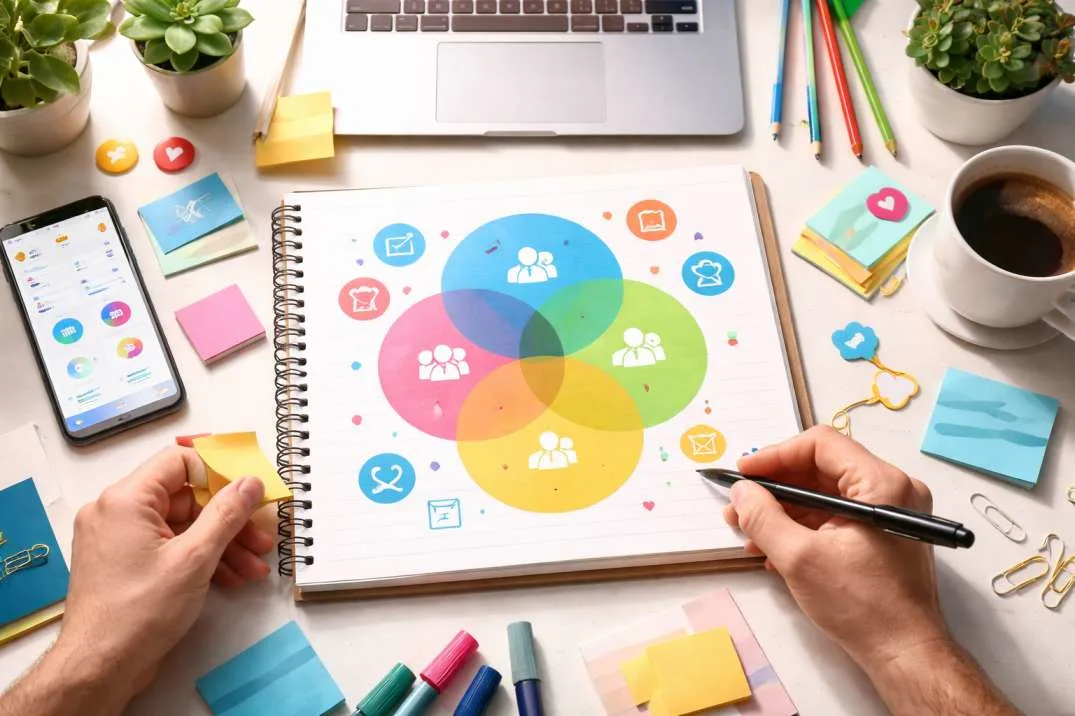
One of the biggest questions I get from new founders is, "What do I actually post about every day?" The answer is Content Pillars. Content pillars are the three to five big topics you always talk about. They keep your feed focused and your brain from freezing up when you sit down to create.
For most startups, good content pillars look something like this:
- Educational posts that teach your audience something useful related to your product
- Behind the scenes posts that show how you make your product or run your business
- Customer wins that share real results from real people
- Personal stories that let people connect with the human behind the brand
When you have your pillars ready, you never run out of ideas. You just rotate through these topics. One day you teach. The next day you share a story. The day after that you celebrate a customer. It flows naturally.
Step 5: Emphasize Short-Form Video
I am going to tell you something that might make you uncomfortable. You need to be on video. Not fancy video with expensive cameras. Just real, honest, short videos shot on your phone.
Right now, the algorithms on Instagram, TikTok, LinkedIn, and even YouTube love short videos. More importantly, real people love short videos. They feel more personal and trustworthy than a polished photo.
So Emphasize Short-Form Video in your social media marketing strategy for startups. You do not need to dance or act silly. Just talk to the camera like you are explaining something to a friend.
Here are three simple short video ideas to get you started:
- Show a common problem your customer has and how your product fixes it in under 60 seconds
- Walk through your workspace and point out one interesting thing
- Answer a question a customer asked you recently
That is it. No scripts. No fancy editing. Just honesty. I promise you, the videos that feel awkward to you often feel charming and real to your audience.
Step 6: Build a Content Calendar & Batch Produce
Posting randomly every day is exhausting. You wake up, panic about what to post, throw something together, and then feel drained. There is a much better way.
Build a Content Calendar & Batch Produce your content. A content calendar is just a simple plan that says what you will post on which day. Batch producing means you set aside a few hours once a week or once a month to make a bunch of posts all at once.
Here is how batch producing changes your life:
- You stop the daily panic of "what do I post today"
- You save hours of mental energy every week
- You keep a steady flow of content even on busy weeks
- You can plan around holidays, sales, and special events
You can use a free Google Sheet as your content calendar. Write down the date, the platform, the topic, and the content pillar. Then on your batch day, shoot all your videos and write all your captions in one focused block. Your future self will thank you.
Step 7: Engage, Don't Just Broadcast
This is where most startups completely drop the ball. They post a beautiful photo or a helpful video, and then they close the app. That is broadcasting. That is not social.
Real social media is a two-way street. You must Engage, Don't Just Broadcast. If someone takes the time to comment on your post, reply to them. If someone sends you a direct message, answer it like a human. If someone shares your content, thank them.
Engagement means doing these things every single day:
- Reply to every comment on your posts for the first hour after posting
- Go to your followers' pages and leave genuine comments on their content
- Answer all direct messages within 24 hours
- Ask questions in your captions to start real conversations
The algorithm notices when you engage. More importantly, people notice. They feel seen. And people buy from brands that make them feel seen.
Step 8: Utilize Free/Low-Cost Tools

You are a startup. You do not have a big budget for fancy software. I get it. The good news is you do not need one. You can Utilize Free/Low-Cost Tools to do almost everything a big agency does.
Here is a list of free or very cheap tools that save me hours every week:
- Canva (free version) for making graphics and simple video edits
- Later or Buffer (free plan) for scheduling posts ahead of time
- CapCut (free) for editing short videos with captions
- Google Drive (free) for storing all your content and planning files
- ChatGPT (free version) for brainstorming caption ideas when you feel stuck
Do not buy expensive tools until you have actual revenue coming in. Use the free stuff. It works great for getting started.
Step 9: Track & Refine
You cannot improve what you do not measure. Every two weeks, sit down for thirty minutes and look at your numbers. This is how you Track & Refine your social media marketing strategy for startups.
The only numbers that truly matter in the beginning are:
- How many people click the link in your bio
- How many direct messages or comments you get per post
- How many new followers you gain each week (not total, just the growth)
- Which three posts got the most engagement
When you see a post that performed really well, ask yourself why. Did you use a certain hook? Did you post at a certain time? Do more of that. When a post flops, do not take it personally. Just do less of that. This small habit of tracking and refining turns your social media from a guessing game into a predictable machine.
Step 10: Influencer & Paid Ads
Once you have done all the free work and you have a little budget to spend, you can look at Influencer & Paid Ads. But here is my strong advice. Do not touch paid ads until you have posted organically for at least sixty days. You need to know what works first.
For influencer marketing as a startup, do not chase big celebrities. Instead, find micro-influencers. These are people with one thousand to ten thousand followers who have a tight, loyal community. They charge much less money, and their followers actually trust them.
For paid ads, start very small:
- Put five dollars a day into an Instagram post that already performed well organically
- Target only your specific niche and audience, not the whole city or country
- Run the ad for one week and watch what happens
- If you make more money than you spent, increase the budget slowly
Paid ads can be a rocket ship for your growth. But only if you have your organic foundation solid first. Otherwise, you are just burning cash.
Benefits of Social Media Marketing for Startups

By now, you might feel a little tired just reading all these steps. But let me remind you why this work is worth it. The Benefits of Social Media Marketing for Startups go far beyond just getting likes.
Here are the real benefits you will see when you follow this plan:
- Low cost to start. You can begin with zero dollars and just your phone.
- Direct access to your customers. You talk to them every day and hear their real feedback.
- Fast feedback on new ideas. Post a new product idea and see the reaction within hours.
- Build trust before you build sales. People buy from faces they recognize and stories they remember.
- Level playing field. A startup with a great strategy can beat a big boring brand every single time.
I have seen a one-person Etsy shop grow into a full time living just by showing up on Instagram with a real plan. I have seen a local plumber fill his schedule for months just by posting helpful videos on Facebook. This stuff works.
Putting It All Together
From there, build your Content Pillars so you never run out of ideas. Emphasize Short-Form Video because that is what gets seen right now. Build a Content Calendar & Batch Produce so you stop the daily panic. Engage, Don't Just Broadcast because conversations build trust. Utilize Free/Low-Cost Tools to save your money. Track & Refine your work every two weeks. And only then, look at Influencer & Paid Ads if you have extra budget.
Remember the Benefits of Social Media Marketing for Startups. You are building an asset that grows over time. The first month might feel slow. The second month you will see a little spark. By month three, you will have real conversations and real customers.
You started this business because you believe in what you offer. Now go show that belief to the small, specific group of people who need you the most. Post that first video. Write that first caption. Start the conversation. Your future customers are waiting.
FAQs for Startup Social Media
Q1: Daily time on social for startups?
One hour max. 30 mins making/scheduling posts, 20 mins chatting back on comments/DMs, 10 mins peeking at stats. Keeps it steady, no crash.
Q2: No cash for ads/tools?
Fine by me. Free Canva, CapCut. Post organic 60 days straight. Loads of us hit 1K customers with $0 ads—just grind and show up.
Q3: Is my strategy working?
Small stuff adds up: "Found you on IG" from a buyer. "Helped me tons" comment. 5 perfect-fit followers. That's the real climb.
Q4: Best platform to start?
Instagram if one only—pics, shorts, vids, DMs all there. But scout your people's spot first.
Q5: Posting frequency?
3-5x week. Quality + comment hustle beats daily junk. Don't flood.
Related Articles
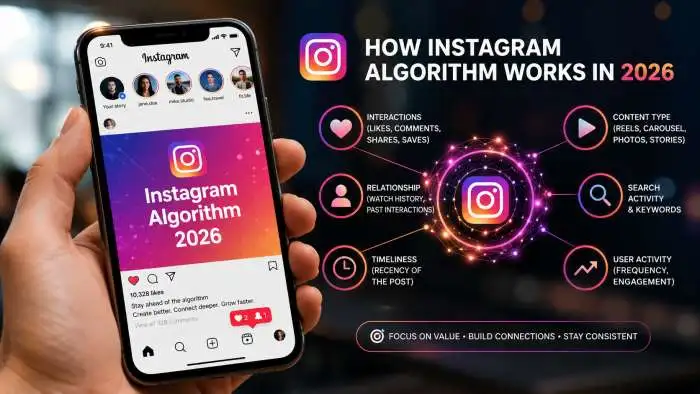
Instagram Algorithm Changes 2026: Why Your Reach Dropped (And How to Fix It)
The Instagram algorithm 2026 is no longer a single system but a group of AI ranking models that decide what content users see first across Feed, Reels, Stories, and Explore. In 2026, the system prioritizes private shares (sends), watch time, and likes per reach over total follower...
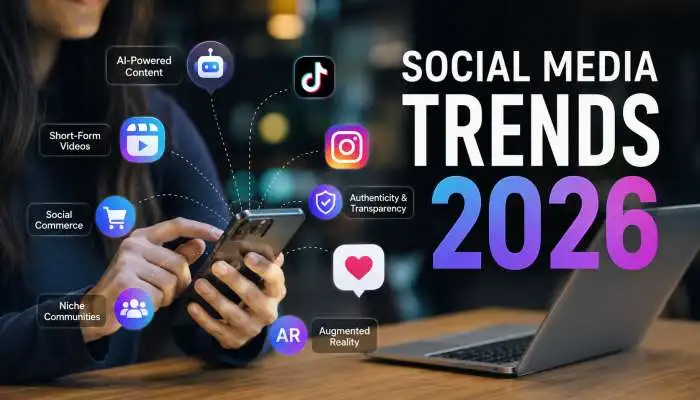
Social Media Trends 2026: Simple Ways to Grow Your Audience
Welcome to social media in 2026. It is a place that feels like many smaller worlds rather than one big, shared online space. The biggest change? People want to build tight communities, not just chase followers. They seek real connections and truthful content. Algorithms now reward...
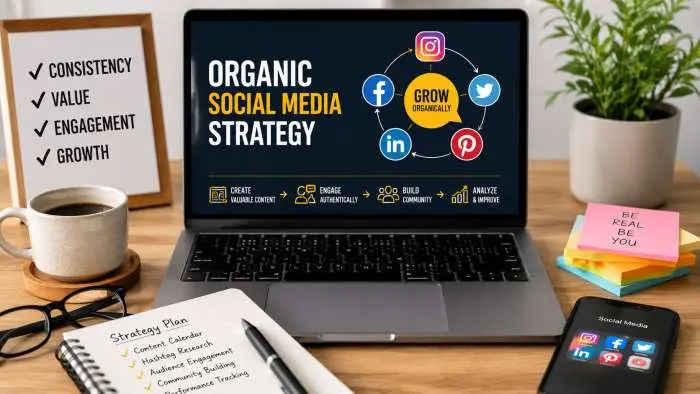
Easy Organic Social Media Strategy: Grow Your Brand Without Ads
Honestly, organic social media is just about playing the long game. You aren't burning budget on ads here; you're just putting out good, free stuff that actually helps people so they stick around. Let's be real: the old playbook of chasing cheap likes is dead. Now...