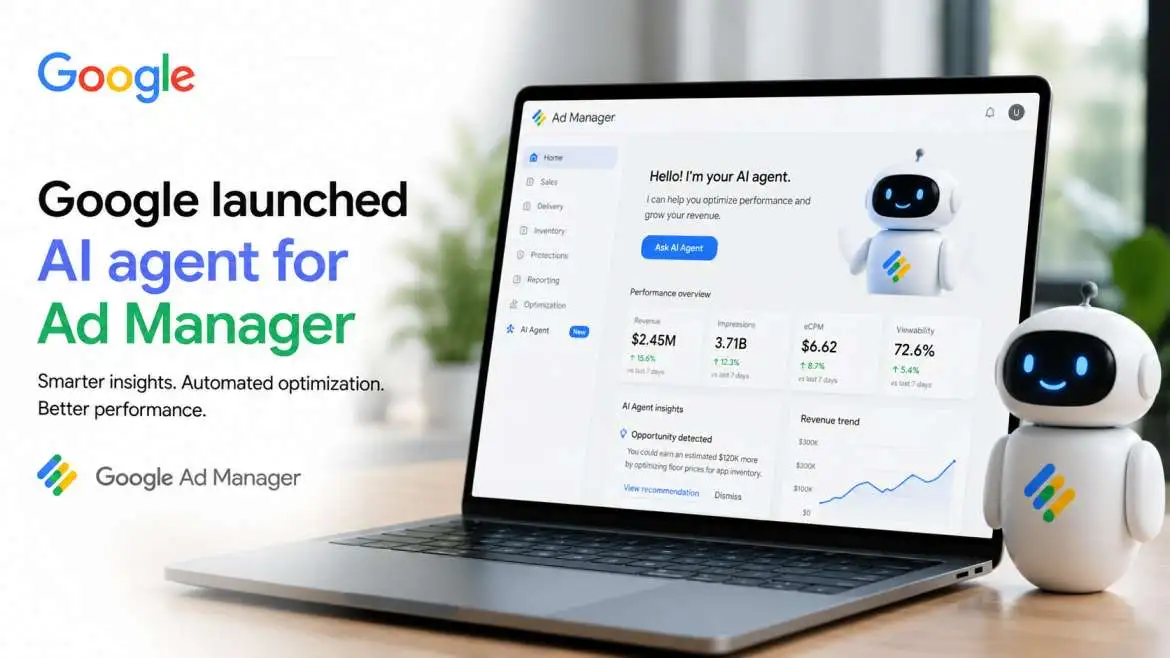
Google launches AI agent for Ad Manager to help publishers manage their ad inventory through natural conversation. The new Gemini-powered tool, officially called Ask Ad Manager, went live in June 2026. This multi-turn conversational AI lives directly inside the Google Ad Manager dashboard.
Publishers can type plain-language questions to troubleshoot delivery problems, generate custom performance reports, and navigate complex platform settings instantly. The system draws answers only from the specific publisher’s own scoped account data, ensuring total privacy. This tool marks a major step toward fully automated, agentic advertising workflows for modern digital publishing networks.
The Big Shift in Modern Digital Advertising
Digital publishing moves faster every day. Ad operations teams spend hours digging through complex menus to fix small problems. Recognizing this massive bottleneck, Google took a massive leap forward this month.
The introduction of Ask Ad Manager fundamentally alters how publishers interact with their data stack. Instead of building custom report configurations or manually cross-referencing hundreds of line items, users now converse directly with their data.
Our team tested the interface during the initial rollout phase. The speed at which it identifies deep infrastructure mismatches stands out immediately. The system shifts the operational focus from tedious technical configuration to high-level strategic growth.
You may also read :- Google May 2026 Core Update: How to Analyze & Recover
Google launches AI Agent in Ad Manager for Smarter Advertising

The programmatic landscape changed permanently when Google launched AI agent for Ad Manager globally. Built entirely on Google's advanced Gemini foundation model, this conversational partner integrates straight into the existing publisher dashboard.
The underlying system maintains strict context across multiple conversational turns. This means you do not have to repeat your main problem when asking a follow-up question. The agent understands your previous sentences perfectly.
"Ask Ad Manager changes our relationship with data. It takes the heavy analytical work off our plate so we can focus on maximizing yield." — Senior Revenue Director at Yahoo Network
Three Core Strengths of the New Conversational Helper
The primary deployment delivers three major updates to daily publisher workflows:
- Real-Time Troubleshooting: If a high-value line item stops serving or underdelivers, the agent analyzes live parameters immediately and points to the exact structural conflict.
- On-Demand Custom Reporting: Users generate deep data tables, custom comparative benchmarks, and performance sheets via brief text commands.
- Intelligent Interface Navigation: The system automatically loads required dashboard filters, settings pages, and direct links based on your conversation.
Why Publishers Need Artificial Intelligence Tools Right Now?
Managing modern ad inventory requires incredible effort. A single publisher platform might run open auctions, private marketplace deals, and direct programmatic campaigns simultaneously.
Human ad operations specialists cannot analyze millions of real-time data points manually every hour. The new Google tool handles this foundational operational layer effortlessly.
The safe architecture keeps your sensitive corporate metrics restricted. No data goes to external servers for processing, which maintains absolute control over proprietary revenue streams.
What Makes This Tool Different From Standard Automated Scripts?
Traditional automated dashboards rely on rigid, predetermined rule sets. If a problem falls outside those specific parameters, the old system fails.
The new Gemini-powered assistant reads through unstructured requests effortlessly. It handles complex, multi-layered human prompts and delivers exact actionable steps within seconds.
How to Troubleshoot Delivery Issues Instantly?
Line-item underdelivery costs digital media companies significant revenue every day. Finding the cause usually involves opening ten different browser tabs to check pricing floors, audience targeting rules, and creative sizes.
The conversational agent removes this friction. You simply type a straightforward query into the chat console: The tool scans your technical settings instantly. It might respond that a recent modification to your geography targeting rules created an unexpected conflict with your floor prices. It then shows you the exact link to fix the issue.
Streamlining Performance Reports With Simple Text Prompts
Building monthly revenue statements used to take hours of filtering and exporting CSV files. The new interface completes these complex operations through simple conversational interactions.
You can ask the system to build a visual comparison chart of your top-performing ad units over the past thirty days. The system processes the data points and builds a clean table on your screen.
Sample Revenue Breakdown via Natural Language Requests
| Ad Unit Placement | Revenue Growth (MoM) | Fill Rate Stability |
| Header Bidding Video | +14.2% | Outstanding (94%) |
| In-Article Display | +3.8% | Steady (88%) |
| Sticky Bottom Banner | -2.1% | Fluctuating (71%) |
Future Roadmap: REST APIs and the Model Context Protocol
Google plans to expand this ecosystem rapidly throughout the remainder of 2026. Developers will soon gain access to dedicated REST APIs and an open Model Context Protocol (MCP) server.
The inclusion of an MCP server is particularly significant for engineering teams. It proves that Google wants to let external systems connect directly with Ad Manager, creating an interconnected web of autonomous revenue tools.
Specialized Agents for Every Part of Your Business
The official product roadmap outlines several upcoming developments:
- Inventory Discovery Tools: Automated systems that find unsold ad space and suggest optimal placements.
- Negotiation Assistants: Smart helpers that communicate with buyer platforms to secure optimal programmatic pricing.
- Campaign Execution Engines: Software agents that build, launch, and monitor massive cross-platform distribution plans automatically.
Optimizing Workflows for Modern Search Systems

As a leading digital publisher, your content strategy must adapt to the reality of search systems. Modern search engines rely heavily on direct information extraction.
Structuring your data clearly allows search crawlers to understand your core message quickly. This ensures your insights appear prominently in automated web summaries.
Key Terms for Modern Search Optimization
- AEO (Answer Engine Optimization): Creating direct, concise answers that match conversational user queries perfectly.
- AIO (AI Overview Optimization): Formatting introductory paragraphs clearly so search algorithms choose your text for main summary boxes.
- GEO (Generative Engine Optimization): Building authoritative, factual content that large language models cite as trustworthy sources.
The Changing Role of Human Ad Operations Specialists
The launch of advanced automated assistants does not mean human ad operations professionals will lose their jobs. Instead, their daily responsibilities are shifting toward high-level strategy.
Human experts possess unique relationship-building skills and negotiation talents that software cannot replicate. The conversational partner simply clears away the tedious administrative work.
Setting Up Your Platform for the Next Generation of Automation
Getting your network ready for this transformation requires a deliberate approach. Clean up your internal data naming conventions immediately so the conversational tool can index your line items accurately. Train your operations staff on advanced prompt techniques. Learning how to ask clear, direct questions ensures your business extracts maximum value from the conversational interface.
FAQ
Is the new conversational assistant available to all publishers right now?
The software launched as a beta version in June 2026. Google is rolling out access in controlled phases to selected publishing accounts before deploying it worldwide.
Does the AI agent share my private revenue data with external platforms?
No. The system processes all questions within the secure perimeter of your specific Google Ad Manager account, keeping your competitive data fully protected.
Can the tool fix delivery bugs automatically without my permission?
The initial rollout functions strictly as an advisory partner. It identifies technical errors and builds direct links to the source of the issue, but a human operator must approve any changes.
Will the system support third-party automation tools in the future?
Yes. Google announced plans to release dedicated REST APIs and an open Model Context Protocol server later this year to allow deep integration with external systems.
Related Articles
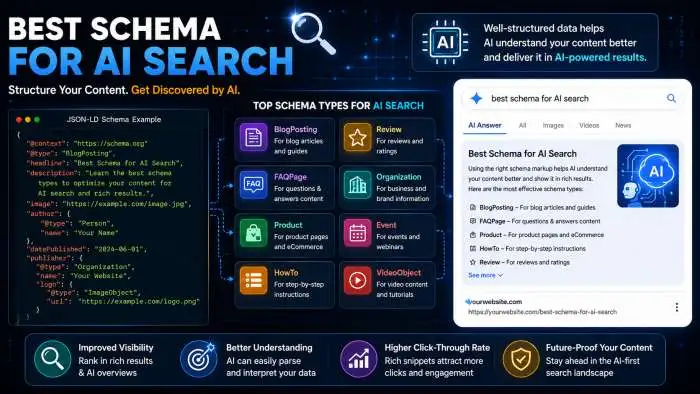
Best Schema Markup for AI Search: How to Get Your Site Cited by LLMs
If you want your content to appear in AI search results, you need to use schema markup. The best schema for AI search is a combination of Organization, Article, FAQPage, and Person schema. These help AI systems like ChatGPT, Google Gemini, and Microsoft Copilot understand...

Easy Digital Marketing Strategy for 2026: Simple Ways to Grow Online
A digital marketing strategy for 2026 is just a well-defined strategy that outlines how you'll achieve your business Goal through online methods and channels. It's the pathway that will help your business reach those who need to know it, and grow your sales. This strategy is centered around who,...

Proven Customer Engagement Strategies to Drive Business Growth
A customer engagement strategy is your plan for building strong relationships with your customers at every step of their journey. It's not just about making a sale. It's about creating real connections that make people feel valued and heard . Think of it as the way you talk...