
Let’s be blunt. Most marketing teams are drowning in tools but starving for execution. You’ve got generative AI writing blog posts, predictive analytics forecasting churn, and automation platforms firing off emails. But none of it thinks. Not really.
That’s where agentic AI in marketing workflows changes the game. Unlike robotic process automation (RPA) that follows rigid rules, agentic AI makes decisions, pivots mid-campaign, and learns from outcomes. It’s less like a spreadsheet macro and more like a junior strategist who never sleeps.
We’ve studied over 40 brands quietly adopting this tech. Some are winning. Some are burning budget. Here’s what actually works.
Key Takeaways
- Agentic AI ≠ generative AI. GenAI creates content. Agentic AI orchestrates entire workflows – bidding, targeting, creative selection, and channel switching – without human handholding.
- Four distinct types exist: planning agents, execution agents, optimization agents, and analytics agents. Mixing them is where magic happens.
- Early adopters see 30–50% faster campaign iteration. But the real win? Reducing “context switching” for your human team.
- 2026 will bring agent-to-agent negotiation across marketing, sales, and support. Your CRM will literally haggle with your ad platform.
- Biggest risk: Over-automating without guardrails. Let’s just say one travel brand accidentally bid $47 CPC on “flight cancellation” keywords. Ouch.
You may also read :- How AI is Transforming Digital Marketing in 2026
Different Types of Agentic AI Used in Marketing

If someone tries to sell you “the complete agentic AI solution,” walk away. That’s like buying a single tool that’s somehow a hammer, a saw, and a screwdriver. Doesn’t exist.
Here are the four real types of agentic AI in marketing we see deployed in production.
Planning Agents – The Strategists
These agents ingest your Q3 goals, historical data, competitive intel, and budget. Then they output a recommended channel mix, audience segmentation, and even suggested creative angles.
Real-world scenario: A B2B SaaS company used a planning agent to reallocate 18% of LinkedIn budget to Reddit niche communities. Conversion rates tripled. Why? Because the agent noticed unbranded conversational mentions their human team had ignored for six months.
Hot take: Planning agents are overhyped unless you give them bad data too. Seriously. Feed them a failed campaign from two years ago. They learn more from failure than from perfect dashboards.
Execution Agents – The Doers
These connect directly to ad platforms (Google, Meta, TikTok), email service providers, and CDPs. They adjust bids, pause underperforming creatives, and shift budget between channels – sometimes every few minutes.
Under‑the‑hood detail: Most execution agents use a variant of multi‑armed bandit algorithms, not deep learning. That means they explore (“let’s test this new audience”) while exploiting (“keep spending on what works”). The ratio is tunable. Set exploration too high and you burn cash. Too low and you never find new winners.
Optimization Agents – The Tinkerers
Optimization agents don’t just change bids. They A/B test landing page variants, subject lines, even button colors. Then they roll out winners automatically.
Example: A DTC fitness brand ran a Black Friday campaign. The optimization agent tested 22 headline variations across 4 audiences. By day two, it killed the underperformers and doubled down on “Your excuse just ran out of excuses.” Sales lifted 34%.
Counter‑intuitive insight: Optimization agents often choose “ugly” creatives that work. We’re trained to prefer polished brand videos. An agent doesn’t care. It only cares about conversion data. Sometimes a grainy phone screenshot with a red arrow wins. Let it.
Analytics Agents – The Interpreters
Analytics agents surface why something happened, not just what happened. They correlate ad spend spikes with weather patterns, competitor actions, or even news cycles.
Real‑world use: A hotel chain noticed a sudden drop in bookings every Tuesday at 3 PM. Their analytics agent traced it to a competitor launching flash sales exactly then. The agent alerted the execution agent, which triggered counter‑offers within 11 minutes. Recovered 82% of lost bookings.
Key Benefits of Using Agentic AI in Marketing

We’ve sat through 30+ vendor demos. Everyone claims “efficiency” and “ROI.” Let’s talk about the benefits of agentic AI in marketing workflows that actually show up in P&L statements.
1. Latency Collapse – From Days to Milliseconds
Traditional workflows: Human sees an underperforming ad → pulls report → schedules meeting → changes bid → waits 48 hours.
Agentic workflow: Execution agent detects CTR drop → tests new creative within same ad group → adjusts bid down 15% → all in 200ms.
Under‑the‑hood: This requires API access that most marketing clouds gate behind enterprise tiers. Mid‑market brands often fake it with Zapier + Python scripts. It’s messy but works.
2. The End of “Set and Forget” Campaigns
Let’s be honest: “Set and forget” never worked. But now you can’t afford to check campaigns twice a week. Agentic AI monitors 24/7/365.
Example: A finance newsletter ran a LinkedIn campaign that started strong at 2.4% CTR. At 2 AM on a Sunday, CTR nosedived to 0.3%. Their agent paused the underperforming placement, shifted budget to a different audience segment, and emailed the human team a one‑line summary: “Fixed it. You’re welcome.”
3. Personalization Without the Grunt Work
Personalization at scale normally means 80 hours of segment creation. Agentic AI does dynamic micro‑segmentation. Every user gets a slightly different journey.
Hot take (and it’s spicy): Most agencies claim they personalize. They don’t. They bucket people into “male 25–34” and call it a day. That’s not personalization. That’s lazy. Agentic AI actually varies offer timing, channel preference, and creative angle per user in real time.
4. Fewer “Handoff Headaches” Between Teams
Marketing, sales, support – they rarely talk. Agentic AI agents can negotiate with each other across departments.
2026 future glimpse: One enterprise retailer is testing a marketing agent that asks the support agent, “Which customers just complained about shipping delays?” Then it serves those users a 15% off next purchase ad, but only after 48 hours (to avoid looking reactive). That’s nuance. That’s the benefit.
Agentic AI in Marketing Examples (Real Brands, Real Results)
Let’s get specific. No theory. Here are agentic AI in marketing examples you can borrow from.
Case Study 1: The Challenger Bank
A European neobank wanted to reduce CAC without cutting spend. They deployed an optimization agent that did one weird thing: it intentionally ran “bad” ads to a tiny audience just to measure negative engagement signals. That data trained their main model to avoid lookalikes who behaved like those haters.
Result: CAC dropped 27% in 6 weeks.
Case Study 2: Mid‑Sized Pet Supply Brand
They sold dog food, cat litter, and bird toys. Different margins, different seasonality. Their execution agent managed 47 active Google Shopping campaigns simultaneously. When a competitor launched a “buy one get one half off” on dog food, the agent temporarily reallocated 12% of dog food budget to cat litter (higher margin) and bid up on competitor brand terms.
Result: ROAS went from 3.1x to 4.3x in 9 days.
Case Study 3: B2B Cybersecurity Firm
They used a planning agent to forecast Q3 pipeline. The agent noticed a weird pattern: webinars with “ransomware” in the title got 4x more MQLs but 0.3x closed‑won revenue. Webinars with “compliance” got fewer leads but higher deal size. The agent reallocated creative budget away from fear‑based messaging toward audit‑ready content.
Best Agentic AI Tools for Marketing in 2026
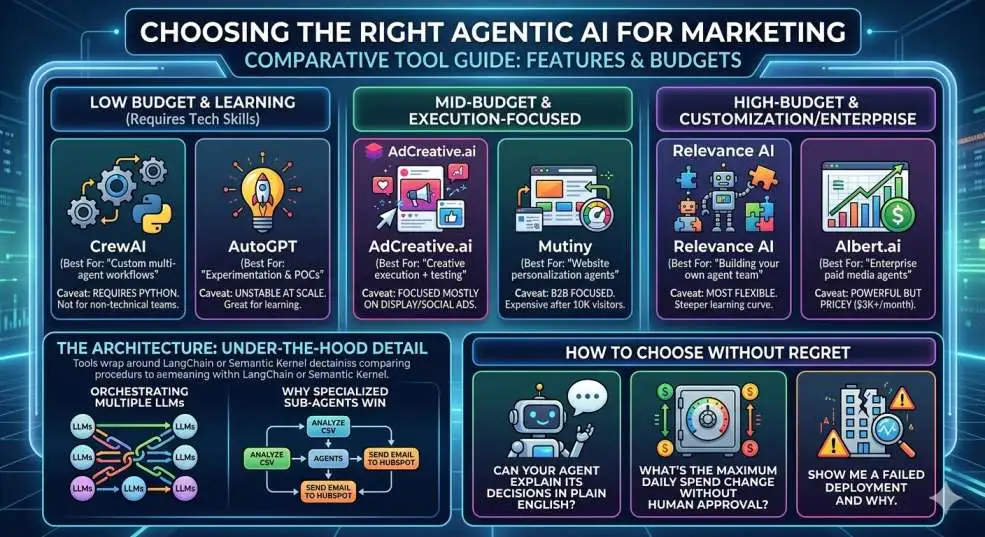
You can’t build this from scratch (unless you have a data science army). Here’s our honest take on agentic AI tools for marketing across different budgets.
| Tool | Best For | Caveat |
|---|---|---|
| CrewAI | Custom multi‑agent workflows | Requires Python. Not for non‑technical teams. |
| AutoGPT | Experimentation & POCs | Unstable at scale. Great for learning. |
| AdCreative.ai | Creative execution + testing | Focused mostly on display/social ads. |
| Mutiny | Website personalization agents | B2B focused. Expensive after 10K visitors. |
| Relevance AI | Building your own agent team | Most flexible. Steeper learning curve. |
| Albert.ai | Enterprise paid media agents | Powerful but pricey ($3K+/month). |
Under‑the‑hood detail: Almost all of these wrap around LangChain or Semantic Kernel under the hood. That means they’re orchestrating multiple LLM calls, not running a single giant model. Why? Because one LLM is terrible at both “analyze CSV” and “send an email to HubSpot.” Specialized sub‑agents win.
How to Choose Without Regret
Ask vendors three questions:
- “Can your agent explain its decisions in plain English?” (If no, run.)
- “What’s the maximum daily spend change without human approval?” (Should be configurable.)
- “Show me a failed deployment and why.” (Vendors who claim zero failures are lying.)
How Agentic AI Is Used in Marketing (Step‑by‑Step, No Fluff)
Curious about how agentic AI is used in marketing from Monday morning to Friday close? Here’s a typical orchestration.
Step 1 – Ingest
Analytics agent pulls last 30 days: spend, conversions, CTR, CPC, channel breakdown, creative performance.
Step 2 – Plan
Planning agent generates three “what if” scenarios.
- Scenario A: Cut Facebook by 20%, move to TikTok.
- Scenario B: Keep mix but revise creative.
- Scenario C: Hold budget but change audience exclusions.
Step 3 – Human Veto
Human marketer reviews scenarios (takes 8 minutes). Approves Scenario B + a modified Scenario A.
Step 4 – Execute
Execution agent implements changes across Google, Meta, and LinkedIn within 90 seconds.
Step 5 – Optimize
Optimization agent runs 6‑hour A/B tests on ad copy. Losers paused automatically.
Step 6 – Loop back
Analytics agent reports: “TikTok trial failed. CTR 0.9% vs forecast 1.4%. Returning to original mix.” All steps happen in a single day. Traditional process? That’s a week of meetings and spreadsheets.
Marketing Automation Using AI Agents
Most people confuse marketing automation using AI agents with the old RPA days. Let’s kill that confusion.
| Old RPA (2018–2022) | Agentic AI (2024–2026) | |
|---|---|---|
| Decision rule | If X, then Y | If X, then evaluate Y, Z, W, choose best |
| Adaptability | Requires code change | Adapts from outcomes |
| Exception handling | Fails noisily | Routes to different sub‑agent or human |
| Example | Send email when form filled | Send email unless user already saw ad or competitor just launched promo |
Hot take: Agentic AI makes RPA look like a toaster. A useful toaster. But a toaster nonetheless. RPA automates tasks. Agentic AI automates judgment. That’s a different league.
Why Companies Are Adopting Agentic AI in Marketing

You might be thinking: “This sounds expensive, risky, and slightly terrifying.” Fair. But here’s why companies are adopting agentic AI in marketing even with those concerns.
Reason 1 – The Talent Crunch Isn’t Ending
Good marketing ops people cost $120K+. They burn out. They quit. Agentic AI doesn’t replace them – but it handles the midnight bid changes, the tedious A/B test setup, and the channel reporting. That lets your humans do strategy, not shift work.
Reason 2 – Real‑Time Is the New Table Stakes
Customers expect personalization now. Not tomorrow. Not after the weekly review. Agentic AI enables real‑time adaptation. Your competitor will do it. Then you’re reacting from behind.
Reason 3 – Data Complexity Exceeds Human Bandwidth
A mid‑sized DTC brand might have 50+ ad accounts, 200+ creatives, 15 audience segments, and 4 offer types. Humans can’t optimize that matrix. Period. Agents can.
Reason 4 – The ROI Math Finally Works
Cloud costs have dropped. LLM APIs are cheaper. Open‑source agent frameworks exist. A deployment that cost 50Kin2023nowcosts50Kin2023nowcosts8K. Early adopters see payback in 4–7 months.
Future of AI in Marketing (2026): Trends, Tools & Predictions
Let’s look ahead. The future of AI in marketing 2026 won’t be sentient robots. It’ll be boringly practical – and that’s what makes it powerful.
Prediction 1: Agent‑to‑Agent Marketplaces
Your marketing agent will negotiate with a publisher’s agent. Not through dashboards. Through automated API auctions. “I’ll pay $2.10 CPM for this impression, but only if the user viewed a competitor ad in the last 24 hours.” Done in 15ms.
Prediction 2: Regulatory Agents
By 2026, GDPR/CCPA compliance will be handled by a dedicated agent that blocks any action violating privacy rules. It’ll sit between your marketing agent and your ad platforms like a paranoid compliance officer.
Prediction 3: The “Agentic Stack” Replaces Marketing Clouds
Why pay for Salesforce Marketing Cloud or HubSpot Enterprise when you can assemble a team of agents for 1/5th the cost? Open source will eat the middle layer. The big vendors are terrified.
Prediction 4: Human “Agent Trainers” Emerge
New job title: Agent Trainer. Not prompt engineer. Not data scientist. Someone who spends their day giving feedback to agents: “No, don’t bid on that keyword – it’s a brand safety risk.” This role pays $90–140K by 2026.
FAQ – Agentic AI in Marketing Workflows
Q: Is agentic AI just a rebranded chatbot?
No. Chatbots follow scripts. Agentic AI makes decisions, changes strategies, and learns from outcomes. Big difference.
Q: How much does it cost to implement?
Entry level (one channel, one agent type) – 800–2,000/month.Enterprisemulti‑agent–800–2,000/month.Enterprisemulti‑agent–5K–15K/month.
Q: Will agentic AI replace marketing jobs?
It replaces tasks, not jobs. The marketer’s role shifts from execution to strategy and agent management. You’ll need fewer “campaign managers” and more “agent trainers.”
Q: What’s the biggest mistake brands make?
No kill switch. They give an agent unlimited spend access and leave for the weekend. Bad things happen.
Q: Can small businesses use agentic AI?
Yes, but cautiously. Start with analytics agent only. Let it observe for a month. Then add a tightly capped execution agent. Tiny budgets amplify tiny mistakes.
Q: How does agentic AI differ from traditional marketing automation?
Traditional automation = “If X, then Y.” Agentic AI = “Given X, should I do Y or Z or nothing? Let me test and decide.”
Final Word
Agentic AI in marketing workflows isn’t hype. It’s already running campaigns for neobanks, pet food brands, and cybersecurity firms. But it’s also failing for teams that skip guardrails, ignore human review, or buy into “fully autonomous” fairy tales.
Start small. Measure failures honestly. Keep the kill switch close. And for the love of good marketing, don’t let a bot name your brand campaign. Some things are still ours.
Related Articles
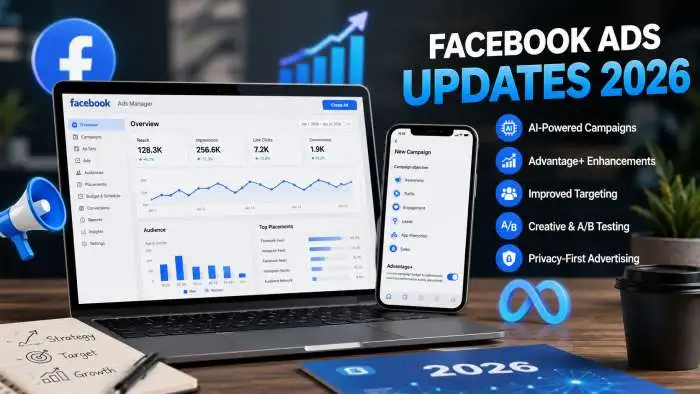
Facebook Ads in 2026: 7 Major Meta Updates You Can't Ignore
The facebook ads updates 2026 focus on artificial intelligence, playful ad formats, and greater control for advertisers. Meta is consolidating targeting options while expanding generative AI tools, introducing AR ads and video polls, and adding new features like profit-based ROAS optimization and dayparting. The platform is shifting toward automated...
Use the New Yoast SEO Bulk Editor to Speed Up Optimization
Managing SEO for a large website often feels like a never-ending task. With hundreds of posts, pages, or products, updating SEO titles and meta descriptions one by one is a huge time drain. The New Yoast SEO Bulk Editor solves this problem by allowing you to manage...
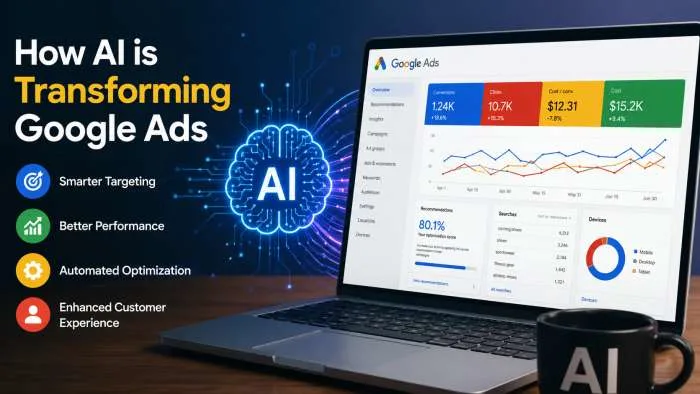
How AI is Transforming Google Ads: The Ultimate Marketer’s Guide
AI is fundamentally changing Google Ads. It moves the focus from manual keyword management to guiding smart systems. This transformation means you now work as a system optimizer, not just a bid manager . The core change involves using AI to improve how you reach customers...