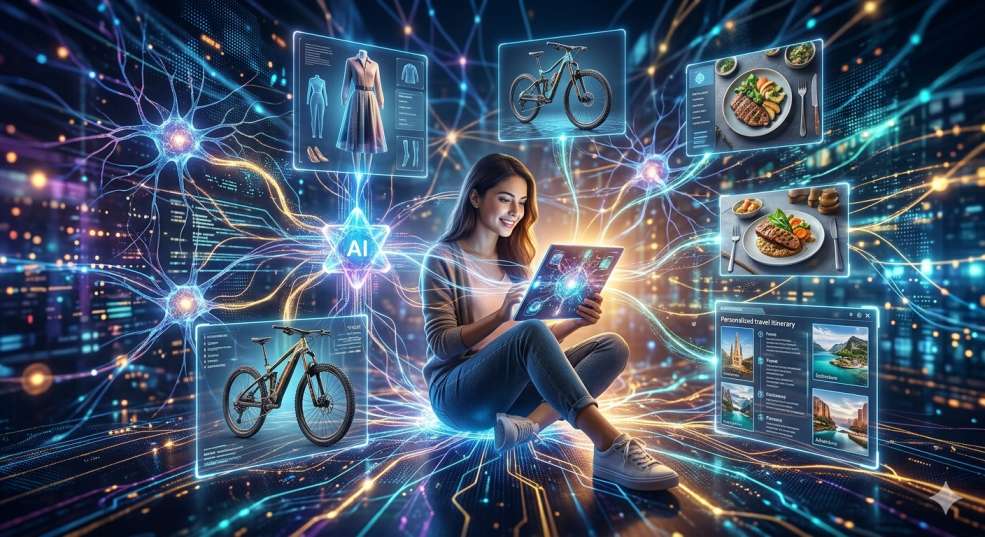
AI enabled hyper-personalization is the practice of using artificial intelligence to analyze real-time customer data and deliver highly relevant individual experiences across every touchpoint. Unlike basic personalization, which might use a customer's first name in an email, this advanced approach predicts what a customer wants before they even know they want it.
By analyzing browsing habits, purchase history, and location data, AI helps brands treat every single visitor like a VIP. This method significantly boosts conversion rates and builds long-lasting customer loyalty in a crowded digital world.
Understanding the Shift from Basic to Advanced Customization
For years, marketers relied on simple rules. "If the customer buys a red shirt, show them more red shirts." That was effective for a while, but modern consumers expect more. They want a brand to understand their current needs, not just their past clicks.
What is Hyper-personalization in Marketing?
Hyper-personalization in marketing moves beyond traditional demographics. It combines behavioral data, contextual data, and real-time triggers. Imagine walking past a coffee shop and receiving a notification for your favorite drink at the exact moment you usually take a break. That is hyper-personalization.
It feels less like marketing and more like a helpful service. This strategy relies heavily on machine learning algorithms to process massive datasets instantly, ensuring the message is always timely and relevant.
You may also read :- Best AI Tools for Content Creation in 2026 Guide
How AI Powers This Level of Detail
Human analysis simply cannot keep up with the volume of data generated online today. AI personalization acts as the engine behind the scenes. It looks at patterns across millions of interactions. It identifies that a specific user segment prefers video content over text at 7 PM, or that a particular customer responds better to discount codes than free shipping.
This technology automates the decision-making process, allowing marketers to focus on creativity and strategy while the AI handles the delivery of the right message to the right person at the right time.
Why AI Enabled Hyper-Personalization is a Game Changer

We have moved from the age of interruption to the age of intimacy. Customers are bombarded with thousands of ads daily. The only way to break through the noise is to be genuinely useful. smart personalization systems allows brands to be just that.
Building Trust Through Relevance
When a website shows you products that perfectly match your style, or a streaming service recommends a movie you end up loving, it builds trust. The customer thinks, "This platform gets me." This trust is the foundation of brand loyalty. It transforms a one-time buyer into a lifelong advocate.
Increasing Revenue and ROI
Generic campaigns have low engagement rates. Personalized calls-to-action convert 202% better than default versions. When you use AI-driven targeting to tailor the entire customer journey—from the homepage banner to the checkout cart—you reduce friction and make it easier for the customer to say yes. This directly impacts the bottom line.
Key Components of a Successful Personalization Strategy
Implementing this technology isn't just about buying software. It requires a thoughtful approach to data and customer experience. You need a solid foundation to make the magic happen.
Real-Time Data Processing
The "hyper" in hyper-personalization means speed. Your systems must process data as it comes in. If a customer abandons a cart, the AI needs to trigger an email or a push notification within minutes, not days. This real-time analysis is what separates a helpful reminder from a spammy, late follow-up.
Predictive Analytics and Behavior Forecasting
This is where the "wow" factor comes in. By looking at past behavior, the AI predicts future actions. A bank might use this to offer a travel rewards card to someone who just started searching for flights. A grocery app might suggest a recipe based on the items currently in the user's digital cart. This forward-thinking approach makes the customer feel truly understood.
Practical Applications Across Different Industries

While e-commerce giants like Amazon popularized this concept, hyper-personalization is spreading to every sector. Any industry that interacts with customers can benefit from tailoring the experience.
Retail and E-commerce
Online stores use AI to curate product discovery. When you see "Customers who bought this also bought..." that is basic personalization. Hyper-personalization takes it further by adjusting the search results on the site based on who is logged in. A luxury shopper sees premium items first, while a bargain hunter sees sales and discounts. The website layout itself can change dynamically for each visitor.
Streaming and Entertainment
Services like Netflix and Spotify are the poster children for this trend. They don't just recommend content; they curate the entire user interface. The thumbnails you see are often chosen by AI based on what visuals you have clicked on before. This subtle customization ensures you spend less time searching and more time enjoying.
Financial Services and Banking
Banks are using AI to monitor spending habits and offer proactive financial advice. If the system detects a recurring subscription the user forgot about, it can flag it. If a user has a surplus of cash at the end of the month, it might suggest opening a savings account. This moves the bank from a transactional utility to a trusted financial partner.
AI Personalization at Scale
Adopting AI-personalization is not without its hurdles. It requires a shift in mindset and infrastructure. However, the benefits far outweigh the initial growing pains.
Data Privacy and Ethical Considerations
With great data comes great responsibility. Customers are increasingly wary of how their information is used. Brands must be transparent. Tell users why you are collecting data and how it benefits them. An opt-in strategy, where customers willingly share preferences in exchange for better service, is far more effective than creepy tracking. You must build a system that respects privacy while still delivering value.
Breaking Down Data Silos
Often, a customer's data is scattered across different departments. The email team has one set of data, the sales team has another, and customer service has a third. For personalized user experience to work, you need a single, unified view of the customer. This means integrating your CRM, your website analytics, and your marketing platforms into one cohesive ecosystem.
"The brands that win the next decade will be the ones that use AI not to replace human intuition, but to enhance it. AI enabled hyper-personalization allows us to scale the kind of genuine care that local shopkeepers used to have for their regulars." — Dr. Anya Sharma, Customer Experience Strategist
The Role of Content in Advanced Personalization Strategies
Content is still king, but context is the kingdom. You can have the best blog post in the world, but if it doesn't relate to the reader's current problem, they will bounce. Avanced personalization ensures your content finds the right audience.
Dynamic Website Content
Imagine a landing page that changes its headline based on the industry of the visitor. A SaaS company might show a healthcare provider different messaging than it shows a retail manager. The core product is the same, but the value proposition is tailored. This dynamic content creation, powered by AI, dramatically increases engagement time.
Personalized Email Journeys
Email marketing remains one of the highest ROI channels. Hyper-personalization AI takes email from batch-and-blast to individualized conversations. Instead of a monthly newsletter, customers receive triggered emails based on specific actions. They receive product recommendations that match their size and color preferences, and they receive them when they are most likely to open and click.
How to Measure Success
You cannot manage what you do not measure. When implementing these strategies, you need to look at metrics that reflect true engagement, not just vanity metrics.
Moving Beyond Click-Through Rates
While click-through rates matter, look deeper at conversion rates and customer lifetime value. Is the personalized experience creating more valuable long-term customers? Look at the average order value for personalized recommendations versus generic ones. Look at the repeat purchase rate for users who engage with personalized content.
Customer Satisfaction Scores
Send out surveys to users experiencing personalized journeys. Ask them if the recommendations were helpful. A high satisfaction score (CSAT) or Net Promoter Score (NPS) among users receiving AI enabled hyper-personalization is a strong indicator that your strategy is working. Happy customers are the ultimate KPI.
The Future of AI and Customer Experience

We are still in the early days of this technology. As AI models become more sophisticated, the level of personalization will become even more seamless and intuitive.
Voice and Visual Search
Future personalization will extend to voice assistants and visual search. Imagine pointing your phone at a landmark and instantly receiving a personalized historical tour based on your interests. Or asking your smart speaker for a dinner recipe and having it consider the dietary restrictions of everyone in your household. This is the next frontier.
Predictive Customer Service
AI will soon predict issues before they happen. If a connected device shows signs of failure, the company can ship a replacement part and email installation instructions before the customer even knows the product is broken.
Getting Started Today
You don't need a billion-dollar budget to start. Begin by auditing the data you already have. Look for small ways to implement personalization, such as segmenting your email list based on past purchase behavior.
Start with a Pilot Program
Choose one channel like your website homepage or your abandoned cart email series and apply AI personalization to it. Test it against your generic version. Measure the lift in engagement. Use those results to build a business case for expanding the program to other areas of the business.
Invest in the Right Tools
Look for marketing platforms that have built-in AI capabilities. Many modern CRM systems and email service providers offer machine learning features out of the box. You don't need to build an AI from scratch; you just need to leverage the tools that are already available to create a more human connection at scale.
Conclusion
The digital landscape is no longer a one-way street. Customers expect brands to listen, learn, and adapt. AI enabled hyper-personalization provides the toolkit to meet these expectations. By leveraging data responsibly and focusing on delivering real value, you can transform casual browsers into loyal fans. The future of marketing is not about shouting louder than the competition; it's about whispering the right thing to the right person at the perfect moment. Embrace the technology, respect the customer, and watch your relationships—and your revenue—grow.
Frequently Asked Questions
1. What is the difference between personalization and hyper-personalization?
Personalization usually uses basic data like location or browsing history to segment users into large groups. hyper-personalization uses real-time data and AI to create a unique experience for each individual, predicting their needs and adapting content instantly.
2. Is AI enabled hyper-personalization expensive to implement?
It can be, but it doesn't have to be. Many SaaS platforms now offer affordable AI modules. You can start small with specific campaigns and scale up as you see a return on investment, rather than overhauling your entire system at once.
3. How do I collect data for hyper-personalization without being creepy?
Always be transparent. Explain why you are asking for data and how it improves the user's experience. Use preference centers where users can tell you what they like. Focus on implicit data (what they click on) combined with explicit data (what they tell you) to build a profile respectfully.
4. Can small businesses compete with large corporations using this technology?
Yes. The playing field is leveling. Small businesses often have a closer relationship with their customers and can use AI tools to scale that intimate knowledge. They can be more agile and implement changes faster than large, bureaucratic corporations.
5. What types of AI are used in hyper-personalization?
Common types include machine learning (for pattern recognition), natural language processing (for understanding text and sentiment), and predictive analytics (for forecasting future behavior). These work together to create the seamless personalized experience.
Related Articles
Facebook Ads in 2026: 7 Major Meta Updates You Can't Ignore
The facebook ads updates 2026 focus on artificial intelligence, playful ad formats, and greater control for advertisers. Meta is consolidating targeting options while expanding generative AI tools, introducing AR ads and video polls, and adding new features like profit-based ROAS optimization and dayparting. The platform is shifting toward automated...

Use the New Yoast SEO Bulk Editor to Speed Up Optimization
Managing SEO for a large website often feels like a never-ending task. With hundreds of posts, pages, or products, updating SEO titles and meta descriptions one by one is a huge time drain. The New Yoast SEO Bulk Editor solves this problem by allowing you to manage...
How AI is Transforming Google Ads: The Ultimate Marketer’s Guide
AI is fundamentally changing Google Ads. It moves the focus from manual keyword management to guiding smart systems. This transformation means you now work as a system optimizer, not just a bid manager . The core change involves using AI to improve how you reach customers...