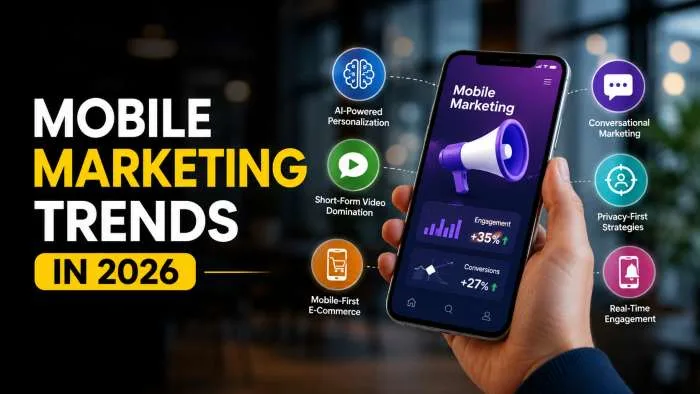
Mobile marketing is changing how brands connect with people. Mobile marketing trends in 2026 show a big move toward smart tools, fun videos, and easy shopping on phones. People use their phones more than computers now, so brands must focus on phones first. This guide shares the latest mobile marketing trends that help businesses grow and connect with customers in new ways.
What is the Latest Mobile Trend Right Now?
The latest mobile trend is using AI to make ads and content just for you. AI-Driven Personalization & Optimization helps brands send the right message at the right time . For example, when you shop on your phone, you see products you might like based on what you looked at before. This makes shopping feel special and easy.
Another hot trend is short videos and AR experiences. Short-form videos like those on TikTok and Instagram Reels are very popular. They are quick, fun, and easy to watch on phones . AR lets you try things before you buy, like seeing how glasses look on your face. These mobile marketing trends make ads more like games or fun videos, not boring commercials.
How Mobile Marketing Trends Are Changing in India?
Mobile marketing trends in India are growing fast, especially in smaller cities and rural areas. More people in these places are using smartphones for the first time . In fact, nearly 75% of new internet users in India live in rural areas . This changes how brands talk to people.
Brands now make ads in local languages and use short videos to connect. They also use voice search because many people find it easier to speak than type . About 45% of digital marketing money in India now goes to non-metro areas . This shows that mobile marketing trends in india are about reaching everyone, not just big city folks.
You may also read :- How to Do WhatsApp Marketing: Ultimate Step-by-Step Guide
The Biggest Mobile Marketing Trends to Watch
AI-Driven Personalization & Optimization
AI-Driven Personalization & Optimization is a game-changer for mobile marketing. AI helps brands know what you like and shows you ads that matter . Almost 94% of marketers plan to use AI for making content this year .
AI also helps send notifications at the best time. For example, a shopping app might send you a deal on shoes right when you usually browse for them. This makes ads feel helpful, not annoying. AI-Driven Personalization & Optimization also helps brands test different ads quickly and pick the best one .
Immersive Formats: Short-form Video & AR
Immersive Formats: Short-form Video & AR are taking over mobile screens. Short videos get people's attention fast. Over 350 million people use Snapchat AR every day . Brands use AR to let people try on makeup, see furniture in their homes, or play games .
For example, a phone company made an AR game where people caught sim cards on their screens. This fun ad led to a 60% increase in sales . This shows how Immersive Formats: Short-form Video & AR can turn play into purchases. Short videos are also great for showing products quickly and clearly.
Conversational Marketing & Messaging
Conversational Marketing & Messaging means talking with customers like friends. Instead of just sending ads, brands chat with people on apps like WhatsApp and RCS . WhatsApp is now the top channel for marketing chats, beating email and SMS .
RCS is a new type of messaging that lets brands send pictures, buttons, and videos in texts . People can reply with a tap, making it super easy. Conversational Marketing & Messaging builds trust and makes customers feel heard. In India, a study showed that chat-based ads get 2.5 times higher brand awareness than regular feed ads .
Omnichannel & M-Commerce
Omnichannel & M-Commerce means shopping everywhere on your phone. People move from social media to apps to websites to buy things. Brands must make all these steps smooth . Over 56% of online shopping during the holidays happened on phones .
Omnichannel & M-Commerce also includes using digital wallets like Apple Pay and Google Pay. These make checking out fast and safe. Shoppable posts on Instagram and TikTok let people buy without leaving the app. Omnichannel & M-Commerce is all about making shopping easy, no matter where you are.
Mobile-First Experiences
Mobile-first means designing everything for the phone screen first. Websites must load fast and be easy to tap . If a site is slow or hard to use, people leave. Mobile-first also helps with search rankings because Google looks at mobile sites first .
Good mobile-first design uses big buttons, simple menus, and clear text. It also compresses images so pages load quickly. With most web traffic coming from phones, Mobile-first Experiences are a must for any brand.
Learn more : - Digital marketing
Advantages of Mobile Marketing
There are many Advantages of mobile marketing for businesses of all sizes. Here are the key benefits:
- Reach More People: Almost everyone has a phone. Mobile marketing lets you reach people anywhere, anytime .
- Personal Touch: You can send messages that feel made just for each person. This makes customers feel special .
- Cost-Effective: Mobile ads often cost less than TV or print ads. You can also start small and grow your budget .
- Real-Time Engagement: You can talk to customers instantly. Push notifications can alert them to sales or new products right away .
- Easy to Measure: You can see exactly how many people saw your ad, clicked on it, or bought something. This helps you improve your campaigns .
- Builds Loyalty: When you offer a great mobile experience, customers come back. Apps and loyalty programs on phones keep people engaged .
Advantages of mobile marketing also include better targeting. You can show ads based on location, interests, or past behavior. This means you don't waste money on people who aren't interested.
Expert Quotes and Opinions
Industry leaders see big changes in mobile marketing. Here's what they say about the trends:
"We're seeing a clear shift across the industry, where the most meaningful interactions are moving away from public feeds into personal conversations." – Yagnesh Ravi, Head of India Ad Solutions at Snap Inc.
This quote highlights the move to Conversational Marketing & Messaging. People want private, one-on-one chats with brands.
"Mobile isn't just another touchpoint, it's the primary stage and brand which act with a 'mobile first' approach are winning." – Megan Knaggs, App Performance & Gaming Executive at Dentsu
This expert opinion stresses the importance of Mobile-First Experiences. Brands that prioritize phones will succeed.
"Rural India is no longer a silo; it is a catalyst shaping national strategy." – Amarnath Dutta, CMO, Cycle Pure Agarbathi
This shows how mobile marketing trends in india are driven by rural growth. Brands must think beyond cities to reach new customers.
"The Chat interface represents a 'high-impact environment' capable of capturing attention early and reinforcing brand associations." – Andy Gallagher, Head of Media at Kantar APAC
This supports the rise of Conversational Marketing & Messaging as a powerful tool for brand recall.
The Future of Mobile Marketing
Looking ahead, mobile marketing will get even smarter and more personal. AI will become a normal part of every campaign . Brands will use data to understand customers better than ever before.
AR and VR will offer more immersive experiences . Imagine trying on clothes or test-driving cars from your phone. 5G networks will make these experiences faster and smoother .
Privacy will also be a big focus. People want to know how their data is used. Brands that are clear and honest will build more trust . Mobile marketing trends show that success comes from being helpful, respectful, and creative.
Conclusion
Mobile marketing trends indicate a solid course of action. The ads are becoming more intelligent and personalized because of AI. They are becoming more fun and interactive thanks to short video and AR technology. Sitting down and casual shopping is creating better relationships with customers. The growth is happening in the rural areas of India; brands should tailor their content for the local market. Any business can be successful in the mobile-first world by following these trends. The main thing is to be helpful, creative and appreciate the time and data of customers. This will ensure you're at the forefront of mobile marketing.
Frequently Asked Questions
What is mobile marketing and why is it important?
Mobile marketing can be any kind of advertising or promotion that can be seen by mobile users on mobile devices such as tablets and smartphones. This is significant since the majority of people spend a great deal of time on their cell phones. Mobile marketing gives brands the ability to reach customers in real time—where they are—thereby facilitating connections and sales.
In what ways can AI be used in mobile marketing?
AI can assist in numerous ways. It can foresee customer likes, send messages at the proper time and even create personalised ads. AI can also assist brands with rapidly screening various ads to choose the optimal ones. This helps save time, money and boosts results.
Which mobile marketing formats are the best?
Short-form video is one of the most effective formats as it is also fast and engaging . Another advantage of AR experiences is they allow users to engage with products. Conversational messaging like WhatsApp and RCS is effective for building relationships and trust .
What are all the possible ways small businesses can leverage mobile marketing?
There are simple steps small businesses can take. Developing a mobile friendly site. Use social media to post short videos. Send SMS with the special offers. In addition, explore the option of chat with customers using WhatsApp. These are affordable solutions that can be used to help small businesses expand.
What's the significance of privacy in mobile marketing?
Mobile marketing is extremely sensitive to privacy. Users want to be aware of the data being collected and how it is being used. Brands need to be explicit and request permission. First party data (data that is gathered from the customers themselves) is a good practice. Acknowledging privacy enhances trust and retains customers.
Related Articles
Easy Mobile Marketing Tips: Simple Ways to Reach Phone Users
To cut to the chase: mobile marketing tips enable you to reach customers in their own context: on their phone. For 2026 that involves developing quick, convenient and personal experiences for those who rely on their phones for virtually anything, be it social media or product...
How to Do WhatsApp Marketing: Ultimate Step-by-Step Guide
Honestly, WhatsApp marketing works so well because you're reaching people where they already spend all their time. But look, you can't just start blasting messages out of nowhere—you absolutely need their permission first. Once you've got that down, it’s just a matter of picking the...
Low-Budget App User Acquisition: How to Grow on a Dime
Getting people to download and use your app is called app user acquisition. It is the lifeblood of any mobile business. Without new users, even the best app will fail. This guide explains everything you need to know. We will cover what it is, how much...