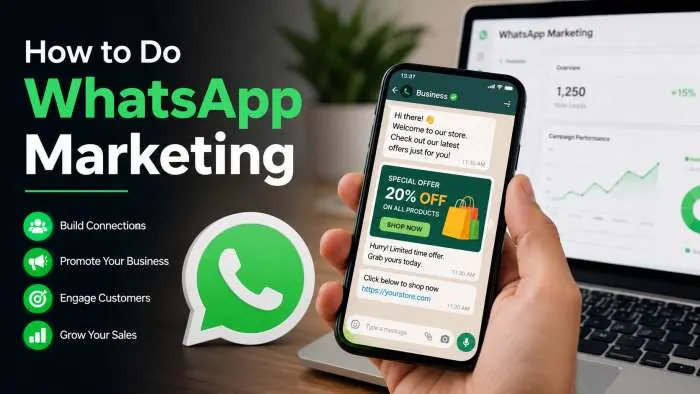
Honestly, WhatsApp marketing works so well because you're reaching people where they already spend all their time. But look, you can't just start blasting messages out of nowhere—you absolutely need their permission first. Once you've got that down, it’s just a matter of picking the right tools for your team size, sending stuff people actually want to read, and playing by Meta’s rules.
If you pair up a verified profile with a clean, tagged contact list and some solid templates, you’re not just sending ads anymore. You're having actual conversations that drive real sales. This guide walks you through the whole thing, from day one setup to tracking your numbers.
Why WhatsApp Marketing Matters Now?
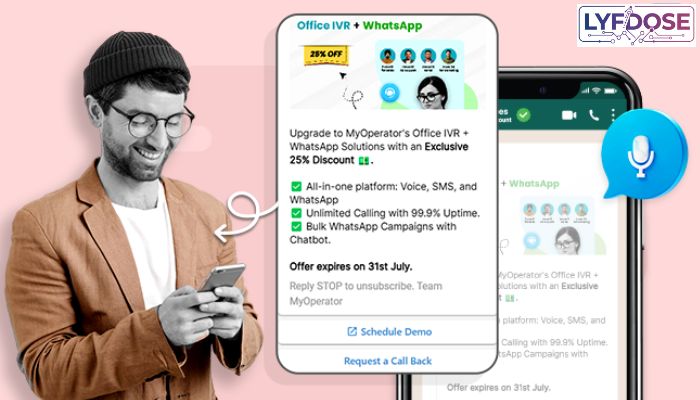
Imagine reaching your customers directly on the app they check over 20 times a day. That is the power of WhatsApp marketing. This platform has over 2 billion active users across more than 180 countries, making it a prime space for businesses to connect with their audience . The magic lies in its personal nature. When you send a message, it feels like a conversation, not an ad.
If you want your business to stay competitive, you honestly can't ignore WhatsApp marketing anymore. The open rates are just wild—we're talking around 98% of messages actually getting read, while traditional email sits somewhere around 20%. That’s a massive difference. To help you get in on this, we put together a straightforward guide that covers everything: setting up your account, growing a legit contact list, launching your first campaigns, and figuring out the actual costs so you don't overspend.
Understanding Your Options: WhatsApp Business App vs. API
Before you start a WhatsApp marketing campaign, you must choose the right platform. Your choice will shape your capabilities and how you can grow.
The WhatsApp Business App: For Small Starters
The free WhatsApp Business App is designed for small businesses. It lets you create a business profile with your address, hours, and catalog. You can use labels to organize contacts and set up quick replies. However, the app has a significant limitation: Broadcast lists are capped at 256 contacts . You cannot automate conversations or use clickable buttons, making it difficult to run large-scale WhatsApp marketing bulk message campaigns. It is best for one-to-one customer service and very small audiences.
The WhatsApp Business API: For Scaling Up
If you have more than 256 contacts, need to automate messages, or want to connect WhatsApp with your CRM, you need the WhatsApp Business API . This is the professional solution used by medium and large businesses. The API is accessed through official Meta Business Solution Providers (BSPs). The API allows for unlimited messaging, chatbot automation, interactive message templates, and rich media like product carousels .
Step-by-Step: How to Do WhatsApp Marketing
This is the core strategy for running successful campaigns. Let's break down the actionable steps.
Step 1: Build a Verified and Trustworthy Profile
Your business profile is your digital storefront. You must fill in every detail: business name, description, address, operating hours, website, and logo. This builds immediate trust and authenticity with customers . A verified profile, especially with the green checkmark, signals that you are a legitimate business. This is the first step in how to do whatsapp marketing effectively.
Step 2: Secure Explicit Customer Opt-Ins
WhatsApp has a strict policy: you cannot message someone unless they have given you explicit permission. This is non-negotiable. Businesses use website pop-ups, checkout checkboxes, QR codes on packaging, or Click-to-WhatsApp ads on Facebook and Instagram to collect consent . A pre-checked box or buried terms of service does not count. You need a clear, affirmative action . This keeps you compliant and ensures your list consists of engaged users.
Step 3: Segment Your Audience for Personalization
Sending the same generic message to everyone is a fast way to get blocked. To succeed in your WhatsApp marketing campaign, you must segment your audience. Group your contacts based on purchase history, browsing behavior, location, or interests . For example, send new product alerts to "High-Intent Shoppers" and re-engagement offers to "Lapsed Customers." This makes your messages relevant and effective .
Step 4: Create and Submit Message Templates
For the WhatsApp API, every outbound marketing message must use a pre-approved message template. A template includes a body with personalization options like the customer's name, and optional headers and call-to-action buttons . You submit these templates through your BSP for Meta's review, which can take minutes to hours. Start with essential templates like:
- Welcome Message: A greeting for new subscribers.
- Abandoned Cart: A nudge with a product image and a "Buy Now" button.
- Order Confirmation: A utility message that builds trust .
Step 5: Automate Your Campaign Workflows
Automation is where you save time and increase revenue. Connect your WhatsApp with your CRM to trigger messages based on customer behavior. For example, automatically send a WhatsApp marketing bulk message to recover a cart 30 minutes after someone abandons it . Set up a "Welcome Flow" that sends a discount code immediately after a user opts in. Use conditional splits so high-value customers receive one follow-up, while others receive another .
Also read :- Mobile Marketing Strategies That Will Dominate in 2026
Understanding WhatsApp Marketing Message Cost

One of the biggest concerns for businesses is WhatsApp marketing message cost. This can be a bit complex, but we will break it down.
Meta's Per-Message Fee
The WhatsApp Business API uses conversation-based pricing. You pay per 24-hour "conversation," not per individual message. The cost depends on the message category and the recipient's country code .
- Marketing Conversations: This is for promotional messages and is the most expensive category. In the US, it is roughly $0.025 per conversation .
- Utility Conversations: This includes order confirmations, shipping updates, and appointment reminders. These are about five times cheaper than marketing messages, at roughly $0.005 in the US .
- Authentication Conversations: This covers one-time passwords and verification codes. This is the cheapest category.
- Service Conversations: If a customer messages you first, you can reply for free within a 24-hour window. The first 1,000 of these conversations are free each month .
BSP Markup and Provider Costs
On top of Meta's fees, your Business Solution Provider (BSP) will charge a markup. This varies significantly. Some providers like Telnyx and Twilio charge a small per-message markup (e.g., $0.004 to $0.005), while others like 360dialog charge a flat monthly license fee (around €49/mo) with no per-message cost .
Example Cost Calculation:
A US business sending 2,000 marketing messages and 5,000 utility messages to US numbers:
- Marketing Cost: 2,000 × $0.025 = $50.00
- Utility Cost: 5,000 × $0.005 = $25.00
- Meta Subtotal: $75.00
- **Telnyx Markup (7,000 × $0.004)**: $28.00
- Total Cost: $103.00 .
Always ask your provider for the total cost per conversation, not just Meta's base rate .
Proven Strategies and Best Practices
To maximize your return, you need to follow these expert-recommended strategies.
Craft Clear and Engaging Messages
People read WhatsApp messages quickly. Keep your copy short and to the point. Use rich media like images, videos, and product carousels to grab attention . Always include a clear call-to-action button like "Shop Now," "Learn More," or "Book Here" to guide the customer on what to do next .
Respect Timing and Frequency
Timing is everything. Don't message customers at 3 AM. Also, don't message them three times a day. A good starting point is one to two promotional messages per week . Monitor your analytics to see when your audience is most active and schedule your sends for those times. Over-messaging leads to high block rates, which damages your sender reputation .
Make Messages Conversational
Unlike email, WhatsApp is designed for two-way dialogue. Use quick-reply buttons to make it easy for customers to engage. For example, send a message that says "Are you still interested in this product?" with buttons for "Yes, help me buy it" and "No, not right now" . This creates a natural, interactive experience that builds trust.
Combine WhatsApp with Other Channels
Don't treat WhatsApp as a replacement for email or SMS. It works best as part of an omnichannel strategy. Use email for broad announcements and newsletters. Use WhatsApp for urgent updates, abandoned cart recovery, and personal customer support. For markets where WhatsApp adoption is lower, fall back to SMS .
How to Run a WhatsApp Marketing Campaign?
Running a campaign involves more than just pressing send. It requires planning.
Setting Up Your First Campaign
Start by defining a specific goal. Are you trying to promote a new product, recover abandoned carts, or re-engage lapsed customers? Each goal shapes your message. Then, select the relevant audience segment. Craft a short, engaging message with a clear CTA and an approved template. Finally, use your BSP platform to schedule the broadcast for the optimal time .
Using Click-to-WhatsApp Ads
Facebook and Instagram ads can open a WhatsApp conversation directly. When a user clicks the ad, it starts a chat with your business. This is a powerful way to grow your opt-in list and generate leads. Meta incentivizes this by offering a 72-hour free conversation window, which can dramatically lower your cost per lead . This is a central part of WhatsApp marketing Meta strategy.
Best Industries for WhatsApp Marketing
Any industry that prioritizes customer comfort can use WhatsApp marketing effectively. It is a fit for almost any solution-oriented business.
E-commerce and Retail
This is a standout industry. E-commerce brands use WhatsApp for abandoned cart recovery, sending product carousels, and hosting "live shopping" events where customers buy directly in the chat . They also use it for back-in-stock alerts, which drive immediate action.
BFSI (Finance and Insurance)
Banks and insurers use WhatsApp for lead qualification, loan processing, and policy renewals. They leverage secure "WhatsApp Flows" to collect sensitive data without clunky web forms, making the process faster for the customer and more efficient for the business .
Travel and Hospitality
Hotels and airlines use WhatsApp for automated check-ins, instant e-vouchers, and real-time flight alerts. They are also deploying "AI Concierges" that can handle everything from WiFi passwords to room service orders .
Key Metrics to Track for Success
You can't improve what you don't measure. Keep an eye on these key metrics.
Engagement Rates
Track your open rates and click-through rates. Because WhatsApp is so personal, open rates are incredibly high. Click-through rates for campaigns often range from 45-60% . If these numbers drop, it is a sign your content or frequency needs adjustment.
List Health
Monitor your subscriber growth and unsubscribe rates. A healthy list is one that is growing. If you see a spike in unsubscribes, you are likely messaging too often or sending irrelevant content .
Conversions and Revenue
Ultimately, the most important metric is revenue. Track how many sales come from your campaigns. Look at conversion rates for your cart recovery flows and the incremental revenue from re-stock alerts . Use this data to refine your approach.
Customer Experience
Track qualitative feedback. Are your repeat purchase rates going up? Are satisfaction scores improving? This indicates that your campaigns are building loyalty, not just driving one-off sales.
Frequently Asked Questions
What is the first step to begin this strategy?
You need to pick the correct version of the tool. Small shops with under 200 customers can start with the free Business App. Growing companies that need to send large broadcasts must sign up for the official API platform.
Can I send broadcast alerts without paying anything?
No, you must pay for outbound promotions. Meta offers 1,000 free customer support chats every month, but sales broadcasts require a fee. The exact price depends entirely on the country code of your customer.
How do I collect phone numbers safely?
Put a simple sign-up checkbox on your website checkout page. You can also print custom QR codes on your packaging or run direct social media ads that open up a chat window immediately when clicked.
How do I check if my account is healthy?
Log into your Meta Business Suite dashboard weekly. Look at your quality rating score. If it stays green, your messages are performing well and your audience is not hitting the spam report button.
4. What is the difference between a broadcast and a group on WhatsApp?
A broadcast sends your message to many recipients individually. Each person receives it as a private chat, and they cannot see the other recipients. A group is a shared chat where everyone can see each other's messages and phone numbers .
5. How much does a WhatsApp marketing message cost in the US?
The cost varies. A marketing conversation (promotion) in the US costs roughly $0.025 per conversation from Meta, plus your BSP markup. A utility conversation (order update) costs roughly $0.005 per conversation from Meta, plus the BSP markup .
Related Articles
Easy Mobile Marketing Tips: Simple Ways to Reach Phone Users
To cut to the chase: mobile marketing tips enable you to reach customers in their own context: on their phone. For 2026 that involves developing quick, convenient and personal experiences for those who rely on their phones for virtually anything, be it social media or product...
What Are the Major Mobile Marketing Trends in 2026? Full Guide
Mobile marketing is changing how brands connect with people. Mobile marketing trends in 2026 show a big move toward smart tools, fun videos, and easy shopping on phones. People use their phones more than computers now, so brands must focus on phones first. This guide...
Low-Budget App User Acquisition: How to Grow on a Dime
Getting people to download and use your app is called app user acquisition. It is the lifeblood of any mobile business. Without new users, even the best app will fail. This guide explains everything you need to know. We will cover what it is, how much...