
An effective ai content strategy means creating content that answers user questions directly and clearly so AI systems can easily find and cite it. This approach helps you show up in AI Overviews and other AI-powered search results. The goal is to become the go-to source for information. Instead of just chasing keywords, focus on building trust and authority. It’s about making your content so helpful that both people and AI systems see it as the best answer available.
The way people find information online has changed forever. They no longer just search with a few keywords. They are having conversations with AI. They ask full questions and expect complete answers . This is why a modern ai content strategy is so important. It helps you stay visible in a world where AI tools like Google's AI Overviews and ChatGPT are becoming the new search engines.
Traditional Search vs. AI Search
In the past, SEO was all about ranking for the right keywords. If you had a page that matched a search, you could rank. Now, AI search is different. Instead of just showing a list of links, AI generates a summary answer . This summary can pull information from many different sources.
This means ranking first is no longer enough. You need your content to be the source the AI chooses for its answer. This is a big shift. A traditional SEO approach might not work as well anymore . You need a new ai content strategy to win in this new environment.
You may also read :- SEO Priorities for AI Search: How to Rank in ChatGPT and Perplexity
How AI Search Work?

AI search engines use smart technology to find answers. They break down a single question into many smaller questions. This process is called “query fan-out” . They then look for answers to all these mini-questions across the web.
For example, if someone asks, "What is the best CRM for a small team?" the AI might look for information on pricing, features, and ease of use . It then puts all this information together into one answer. This is a powerful way to get information. It is also why a well-planned ai content strategy that covers a topic in full is so valuable.
What is an AI Content Strategy and Why Do You Need It?
An ai content strategy is a plan for creating content that is helpful for people and easy for AI to understand. It is more than just writing blog posts. It involves thinking about how AI finds and uses information. The goal is to make your content the answer that AI gives to users.
You need this strategy because the rules of search have changed. AI is changing how people discover brands. In fact, 48% of companies are now optimizing their content for AI tools . This shows it is a major priority. Without a plan, your content could become invisible. It won't matter how good it is if AI cannot find it. A good ai content strategy ensures your hard work pays off and drives real results.
Building a Content Strategy for AI Search
This part of your ai content strategy is about setting up a strong foundation. It involves creating a system that helps AI understand your expertise. It is not just about one piece of content, but all of them working together.
1. Think in Topics, Not Just Keywords
The old way was to focus on one keyword per page. The new way is to become an expert on a whole topic . AI systems are smart. They understand relationships between ideas. They can tell if you are just writing about keywords or if you truly understand a subject. This means you should create content clusters.
You build one main "pillar" page about a broad topic. Then, you create many smaller articles that link back to it . This shows AI that you are an authority on that subject.
2. Make Your Content "Snippable"
AI loves content that is easy to pull and quote. This is what "snippable" means. Think of it like this: if an AI needs a quote, it wants a clear, short paragraph or a simple list. Avoid long, complex sentences. Break down your ideas into simple, easy-to-read chunks.
You should also use clear headings (H2, H3) for each sub-topic . This helps AI understand the structure of your content. It can quickly skip to the part that answers a specific question.
3. Write Like You Are Answering a Question
This is a key part of any modern ai content strategy. AI is great at answering questions. So, you should write your content to match that style. Use headings that are questions, like "What is a content strategy for AI search?" or "How do you optimize for AI Overviews?"
Then, give a direct and clear answer right underneath . This makes it very clear to the AI what you are talking about. It also gives users the quick answer they are looking for.
Key Steps to Optimize Content for AI
Once you have a plan, you need to take action. These steps will help you optimize content for AI directly. This is where you make the technical and writing changes that help you get noticed.
1. Focus on E-E-A-T
E-E-A-T stands for Experience, Expertise, Authoritativeness, and Trustworthiness . It is a concept Google uses to judge content quality. For AI, this is more important than ever. AI needs to know it can trust your information. You can build trust in a few simple ways:
- Show your experience: Share your own stories and examples.
- Add expert quotes: Quote known experts in your field .
- Use original data: Share your own research or statistics . This makes your content unique and valuable.
2. Add Structured Data (Schema Markup)
Schema markup is like a secret code you put on your website. It tells AI exactly what your content means. For example, you can use FAQ schema to mark up your question-and-answer sections. You can use Article schema to tell AI your page is an article . This is a key element of GEO. It helps AI understand the context of your page. When AI can understand your page, it is much more likely to use it as a source . This is a simple but powerful way to boost your visibility.
3. Create a Great User Experience
AI notices how people interact with your website. If people leave your page quickly, it is a bad sign. This tells AI that your content might not be useful. So, you need to make sure your website is fast, easy to use, and mobile-friendly. Also, use good internal linking. This means linking to other helpful pages on your site . This helps AI map out your site's structure. It also helps users find more good content. A good user experience is good for people and good for your ai content strategy.
Content Optimization for AI: How to Win in AI Overviews

Getting your pages featured in Google’s new summary boxes is a major goal for modern websites. These quick answers sit right at the top of the screen, often giving readers exactly what they need in seconds. While some worry this will steal clicks, it actually opens a massive door for your business.
When a search engine highlights your site as their source, you instantly gain massive authority. People trust the brands that these platforms point to, which naturally sends more high-quality buyers straight to your website.
Understanding AI Overviews
A lot of SEOs were worried when AI Overviews first appeared. They thought it would kill traffic. But the reality is more complex. According to Search Engine Land, if you rank organically, you can also rank in the AI Overview for the same search . The AI pulls from sources it trusts. These sources are often the same ones that rank well in traditional search. This means you can win in both places.
The key is to follow SEO best practices. Google says you should start with the basics. This includes meeting technical SEO requirements. It also means avoiding thin, spammy content . The fundamentals are still the foundation of any good ai content strategy. Building a strong, trustworthy site is the first step to getting cited.
Best Practices for Getting Cited
Here are some practical tips to help your content appear in AI Overviews. This is what content optimization for AI looks like in practice.
- Follow SEO Best Practices: This is step one. The same things that help you rank in search help you get into AI Overviews.
- Lead with Answers: Start your sections with a direct answer to the question you are addressing . Do not make the AI work to find the point. Put your main point first, then explain it. This is what the "inverted pyramid" style is all about . It’s a proven writing technique for AI and humans.
- Use Headings and Structure: Clear headings, lists, and tables make your content easy to parse . An H2 heading like "Optimize content for AI Overviews" is much better than a vague heading like "Best Practices." This signals to the AI what the section is about, making it a perfect candidate for extraction.
- Keep it Fresh: AI systems prefer up-to-date information . Update your content regularly. Keep your statistics current. Replace outdated examples. This shows that you are a reliable source.
The Role of "Human-in-the-Loop"
A major part of a successful ai content strategy is the "Human-in-the-Loop" framework . This means that AI does the heavy lifting, but humans do the final polish. Do not just take what an AI writes and publish it. That is a recipe for content that feels flat and generic. To create content that stands out, you need humans.
Humans are the ones who can check facts. They can spot when an AI "hallucinates" or makes something up . They also inject personality and real stories. An expert can share a personal anecdote that a machine never could. This is what makes content feel real, trustworthy, and engaging. It is the human touch that makes your content truly valuable and unique. This is how you move from AI-generated "slop" to high-quality, authoritative content .
Here is a simple workflow to illustrate this:
| AI Handles | Human Handles |
|---|---|
| Brainstorming ideas and outlines | Fact-checking and ensuring accuracy |
| Writing the first draft | Adding personal stories, unique insights, and a clear brand voice |
| Basic repurposing (e.g., social posts) | Making final editorial decisions to improve clarity and flow |
This mix is the most effective way to produce content at scale without losing quality.
Creating a Citation-Worthy Article
To make your article a source that AI loves, follow these simple rules. They are essential for content optimization for AI.
1. Use Clear and Descriptive Headings
Do not use creative, vague titles like "Getting Started." Instead, use headings that are questions or clear statements. An example would be, " What is a content strategy for AI search?" This tells the AI exactly what the following paragraph is about . It makes it much easier for the AI to pull that specific section as a citation.
2. Keep it Simple and Short
The best content is easy to read. Use short sentences and short paragraphs. Do not use big words or complex jargon. This is not about dumbing down your content. It is about making it accessible. AI and humans both prefer clear, direct language. When you write simply, you increase the chances that the AI will understand you and quote you .
3. Use Data and Expert Quotes
Make your content more credible. Include real statistics and quotes from experts. Always cite the source of your information . For example, say, "According to HubSpot, AI Overviews appear in 16% of all searches." This gives your content weight. It shows you have done your research. It is a simple way to show authority.
Optimize Content for AI Overviews: Your Action Plan
Let’s put this all together into a clear action plan for your ai content strategy. This will help you start optimizing your content right now.
Step 1: Audit Your Current Content
First, look at the content you already have. Can AI easily find the answers in your articles? Do you have clear headings? Are your paragraphs short? Use Google Search Console to see what pages are getting the most traffic. Then, review them and ask: "If an AI read this, would it understand my main point quickly?" This will show you where to start. This is the first step in any serious content optimization for AI project.
Step 2: Find Questions People are Asking
AI search is often about questions. So, you need to find the questions your audience is asking. You can do this by looking at:
- The "People Also Ask" section on Google.
- Forums like Reddit and Quora .
- Your own website's search bar.
Once you have a list of these questions, you can start writing content that answers them directly. This is a core part of content strategy for AI search . It ensures you are creating content that people are actually looking for.
Step 3: Write for a 5th-Grade Level
This is a simple, powerful rule. Aim to write at a 5th-grade reading level. This is not an insult to your readers. It is just about being clear and direct. Many of the most successful publications write this way. It makes it easy for anyone to understand your content. It is also the easiest kind of content for AI to parse and summarize . This simple change is a massive win for your ai content strategy.
Step 4: Use the Inverted Pyramid
This is a classic journalism technique. You start with the most important information first. You deliver the answer right away. Then, you add more detail and context later . This is perfect for AI. If an AI needs a short quote, it has it right at the top. If a user wants to learn more, they can keep reading. This format is a key part of learning how to optimize content for AI search.
Step 5: Create a Dedicated FAQ Section
A FAQ section is a goldmine for AI. It is a list of questions and answers. This is exactly what AI systems are looking for. Use clear H3 headings for each question . For example: " How do you optimize for AI Overviews?" Then, give a clear, direct answer below. This is the most straightforward way to optimize content for AI Overviews.
Conclusion: The Future of AI Search is Here
Let's be real—the old ways of searching the web are dying out fast. If you want people to actually find your website today, you absolutely need a solid ai content strategy that fits how modern search engines think. Don't worry, nobody is telling you to hand your blog over to a bunch of robots or stop being creative.
It is mostly just about organizing your facts so these new search tools can grab your points and share them instantly. The folks winning at this right now are simply blending their own messy, real-world experiences with clean data. Just focus on answering your customers' actual questions better than the next guy, and your traffic will take care of itself.
Frequently Asked Questions
1. Does an AI content strategy differ from traditional SEO?
Yes, but they work together. Traditional SEO focuses on ranking a page. An ai content strategy focuses on making content that AI will cite in its answers . It is a new layer on top of your SEO efforts.
2. How do I know if my content is being cited by AI?
This can be tricky. You can use tools to check. Some companies offer AI visibility trackers . You can also manually search your topic in Google or ChatGPT to see if your site appears in the answer .
3. Is it necessary to use schema markup for AI optimization?
While not strictly required, it is highly recommended. Schema markup helps AI understand the context of your content . It gives the AI a clear signal about what your page is about.
4. How important is E-E-A-T for an AI content strategy?
It is absolutely critical. AI uses E-E-A-T (Experience, Expertise, Authoritativeness, Trustworthiness) to decide if a source is reliable . Without strong E-E-A-T, AI is less likely to trust and cite your content.
Related Articles
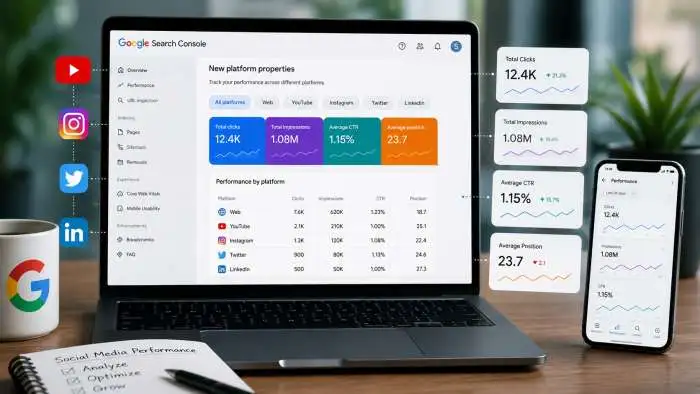
Track Your Instagram, TikTok and YouTube Traffic in Google Search Console
Imagine seeing exactly what people search for on Google before they find your TikTok video or Instagram Reel. That is now possible. Google's new platform properties for Search Console give you this superpower. This feature connects your social media accounts to Search Console. You can...

How Do You Optimize for AI Search? Essential Strategies Explained
If you want to know how to optimize for AI search, here is the simple answer: focus on creating clear, helpful, and well-structured content that answers real questions. AI systems like ChatGPT, Google's AI Overviews, and Perplexity look for content that is easy to understand, trustworthy,...

Local GEO Baseline Audit Guide: Benchmarking AI Visibility
Are you invisible to AI? A local GEO baseline audit shows exactly how AI tools like ChatGPT, Gemini, and Perplexity see your business. This audit is the starting point for all your AI search efforts. You will benchmark your current visibility, find data errors, and learn how...