
Are you invisible to AI? A local GEO baseline audit shows exactly how AI tools like ChatGPT, Gemini, and Perplexity see your business. This audit is the starting point for all your AI search efforts. You will benchmark your current visibility, find data errors, and learn how to fix them before you spend time and money. This guide will walk you through each step.
Why Does the Baseline Come First?

Think of a local GEO baseline audit like stepping on a scale before starting a new diet. If you don't know your starting weight, you will never know if you are losing any. The same is true for AI search. Without a baseline, you are just guessing. You need numbers to track.
A baseline answers a critical question. Can AI even find and understand your business online? AI engines need to crawl and trust your website. If they can't, no amount of content will help you.
AI does not think like a regular search engine. Google Maps focuses on who is closest to you. But AI looks at trust and consistency across the web. A local GEO baseline audit helps you see this new reality.
"A business can dominate the map pack and still disappear the moment someone asks ChatGPT for a recommendation." – Adam Heitzman, Co-Founder of HigherVisibility
You may also read :- SEO Priorities for AI Search: How to Rank in ChatGPT and Perplexity
Step 1: Assemble Your Audit Inputs
Before running a single prompt, you need a plan and a spreadsheet. You will ask specific questions across different AI platforms. You must test where your customers actually look.
Organize Your Query Categories
You should ask questions in four main groups. Each group shows you a different weakness .
- Discovery Queries: "Best pizza near me" or "Top plumber in Austin."
- Comparison Queries: "Joe's Diner vs. Mike's Cafe in Chicago."
- Trust Queries: "Is Dr. Smith reliable?" or "Sunny Auto reviews."
- Logistics Queries: "Hours for Main Street Pharmacy" or "Parking near City Hall."
Which Platforms to Test
You must test across different AI systems. Do not just check one. Each pulls data from different places.
- ChatGPT
- Google AI Overviews
- Perplexity
- Gemini
Control for Variables
You need to set up a clean test. This makes your data accurate.
- Location: Set your location to the city you are auditing. AI answers change based on where the user is.
- Session: Run a clean test without logging in. Also run a test while logged in. This reduces personalization noise.
- Date: Always date-stamp every test. AI models update constantly. A screenshot from last month is useless without a date.
Step 2: Run the Prompts and Record the Results
Now, it is time to ask the questions. You will run each query from your list. You will record the results in your spreadsheet. Doing this work is the core of the local GEO baseline audit.
What to Record for Every Prompt
You need to capture five key data points for every answer .
- Mention: Did the AI mention your business name?
- Order: Where were you listed? Were you first, in the middle, last, or missing entirely?
- Sentiment: Was the tone positive, neutral, or negative?
- Accuracy: Are the hours, address, phone number, and services correct?
- Sources: Which websites and directories did the AI use for its answer?
Building Your Spreadsheet
Create columns in your spreadsheet for all of this data.
- Prompt
- Platform
- Mention (Yes/No)
- Position
- Accuracy Score
- Sentiment
- Top Sources
Calculate Your Key Metrics
You will then calculate two main summary metrics.
- Visibility Percentage: How often does your business appear in the answers?
- Accuracy Percentage: How often are the facts about your business correct?
Don't Forget Your Competitors
Log the competitors you see in the answers. Note who appears, where they rank, and which sources they use. This tells you who is winning in AI.
Step 3: Diagnose the Gaps
Once you have your data, you will look for problems. Every issue will fall into one of three buckets. This is the diagnose the gaps step .
- Invisible: You are not showing up at all. This is the most common problem for businesses. It usually means AI crawlers are blocked, or you lack third-party mentions.
- Inaccurate: You show up, but the information is wrong. The address is old, or the hours are incorrect. AI treats this as a trust signal. The AI will stop recommending you.
- Misframed: You show up, but you are buried under competitors. Or the AI describes you as the weaker option. This often points to a thin review profile or weak authority.
Step 4: Fix in the Right Order
Once you know where the gaps are, you can fix them. But you must fix in the right order. Do not skip steps. The sequence is critical.
Eligibility First
You must make sure AI can access your site. If you don't do this, nothing else matters.
- Check Crawlers: Look at your
robots.txtfile. Check settings for Cloudflare. These can accidentally block AI bots . - Clean NAP Data: Ensure your business Name, Address, and Phone number (NAP) are identical everywhere. This means your website, Google Business Profile, and all directories must match.
- Validate Schema: Add structured data to your website. Use
LocalBusiness,Organization, andServiceschemas.
Trust Signals Second
Now, you build credibility. AI needs to see that other people trust you.
- Build Reviews: Get more reviews on Google, Yelp, and industry-specific sites.
- Respond to Feedback: Answer your reviews and questions. AI notices this engagement.
- Ensure Consistency: Your story must be the same across your website, social profiles, and press coverage.
Relevance Last
Only now should you touch your content. Optimizing content before fixing eligibility is a waste of time.
- Create Real Content: Build city pages with true local details. Do not just swap city names in a template.
- Be Specific: Use real examples, clear service pages, and solid logistics information.
Step 5: Make the Audit Repeatable
A one-time audit is just a snapshot. You need to make this audit repeatable. AI changes all the time. What works today may not work next quarter.
Schedule Your Cadence
Most local businesses should run the audit every quarter. This is often enough to catch major changes without turning the audit into a full-time job .
What to Track Over Time
Watch these signs to see if your efforts are working.
- Mention Rate: Is the number of appearances going up?
- Positioning: Are you moving up in the list of recommendations?
- Error Rate: Are the facts becoming more accurate?
Understand Model Drift
Compare each audit to the last. Does the AI suddenly prefer different sources? Does it phrase answers differently? This is called model drift. Understanding it is key to staying ahead.
How to Measure GEO Performance?

You have completed the local GEO baseline audit. You have fixed the gaps. Now, how do you know if it is working? You need to know how to measure GEO performance.
Focus on Share of Search
Look at your share of search. This is a leading indicator of future market share. It shows if your brand is becoming more relevant to people searching. If your share goes up, you are winning .
Track Branded Search Lift
When an LLM recommends you, people often open a new tab and Google you. Watch for an increase in people searching for your business by name. This shows AI recommendations are working .
Follow Buyer-Intent Traffic
Not all traffic is equal. Look at the traffic from people who are ready to buy. Track non-branded commercial clicks. If these increase, your GEO strategy is creating real demand .
Monitor Prompt Visibility
Go back to your priority prompts. Test how often you appear now compared to your baseline. If your local GEO baseline audit was effective, you should see a steady climb in prompt visibility .
Observe Real-World Actions
Do not obsess over clicks. AI answers often don't produce clicks. Watch for more phone calls. Look for an increase in requests for directions to your location. These actions show the AI recommendation is driving real business .
Conclusion
A local GEO baseline audit is your first step. You must see how AI views you before you can fix the problem. This audit does not stop. It is a process you need to repeat to stay ahead of the changes. Start today. Run the prompts. Record the results. Fix the gaps. Watch the future of local search show up on your doorstep.
Frequently Asked Questions
What is a local GEO baseline audit?
It is the process of testing how AI tools like ChatGPT and Gemini see your business. It benchmarks your current visibility and accuracy before you start any new SEO work. This gives you a starting point to measure progress.
How often should I run the audit?
You should run the audit quarterly. AI models are updated all the time. Running the audit quarterly lets you catch major changes and adjust your strategy without it becoming a full-time job.
Why does order matter when fixing gaps?
Order matters because fixing your content before fixing your eligibility is a waste of time. If AI bots are blocked from your site or your NAP data is messy, AI will never see your new content. Fixing crawl access and trust signals first is essential.
Which AI platforms should I test?
You must test ChatGPT, Google AI Overviews, Perplexity, and Gemini. Each platform pulls data from different sources. Appearing on one platform does not guarantee you will appear on another.
What should I do if my business is invisible on AI?
Start with Step 4: Fix in the Right Order. Check your robots.txt and Cloudflare settings to make sure you are not blocking AI bots. Then, clean up your NAP data and add structured data. If you have no citations, you may need to build trust signals first.
Related Articles
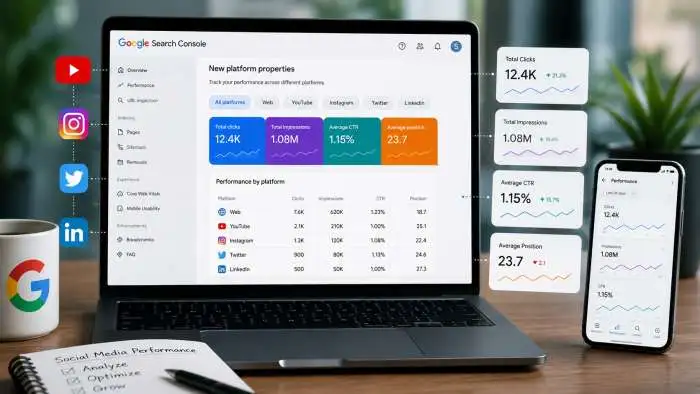
Track Your Instagram, TikTok and YouTube Traffic in Google Search Console
Imagine seeing exactly what people search for on Google before they find your TikTok video or Instagram Reel. That is now possible. Google's new platform properties for Search Console give you this superpower. This feature connects your social media accounts to Search Console. You can...

How Do You Optimize for AI Search? Essential Strategies Explained
If you want to know how to optimize for AI search, here is the simple answer: focus on creating clear, helpful, and well-structured content that answers real questions. AI systems like ChatGPT, Google's AI Overviews, and Perplexity look for content that is easy to understand, trustworthy,...

How to Build an AI Content Strategy That Actually Ranks and Converts
An effective ai content strategy means creating content that answers user questions directly and clearly so AI systems can easily find and cite it. This approach helps you show up in AI Overviews and other AI-powered search results. The goal is to become the go-to source for...